
15 Years of Regulation Obliterated — And America Wins
Robert Burgess • February 11, 2026
The Trump Administration tears down the EPA endangerment finding, returning power to states, entrepreneurs, and free markets.
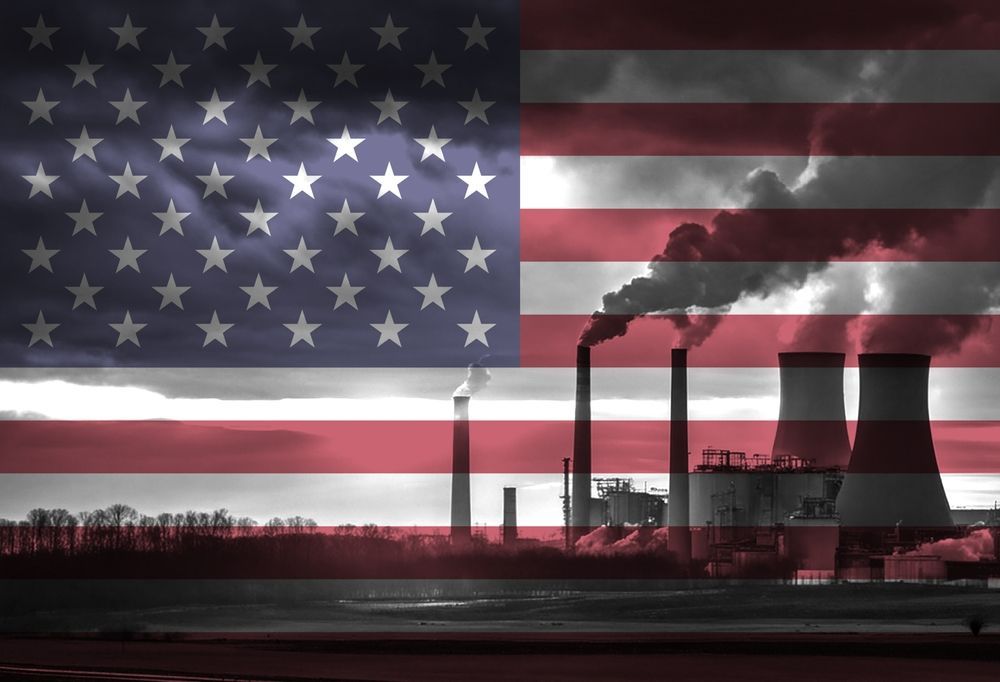
In an era defined by soaring inflation, supply chain anxiety, and shrinking horizons for American opportunity, American voters gave President Donald J. Trump an Electoral College mandate to return to Washington, D.C. to make sweeping changes. And the Trump Administration’s imminent repeal of the Environmental Protection Agency’s 2009 “endangerment finding” constitutes one of the most consequential steps yet in honoring that mandate. This decision isn’t merely a policy tweak or a regulatory adjustment. It is a foundational shift in how the federal government views its own reach and an unmistakable reaffirmation of the principles that animate the heart of the conservative movement: limited government, economic freedom, and the sovereignty of the American people.
For over 15 years, the 2009 endangerment finding has stood as the legal linchpin for federal greenhouse gas regulation. It has been the backbone for sprawling rules under the Clear Air Act, including mandates on vehicle emissions and costly requirements across energy and manufacturing sectors. Its impact was far from abstract; it created a regulatory cascade that burdened producers, smothered innovation, and handed Washington bureaucrats unchecked authority to dictate economic outcomes. Today, those shackles are being broken.
This isn’t ideological indulgence. This is the fulfillment of a promise — one made clearly and repeatedly — to restore common sense to federal governance and to unleash the American economy from the grip of unelected bureaucrats.
A Deregulatory Victory the Left Can’t Spin Away
White House Press Secretary Karoline Leavitt’s characterization of this repeal as “the largest deregulatory action in American history” is not hyperbole — it is an accurate summation of the economic and constitutional magnitude of what’s at stake. Over the last decade and a half, federal greenhouse gas regulation (under the endangerment finding) became the tool through which successive administrations imposed broad mandates that stunted growth, elevated compliance costs, and created uncertainty in every corner of the U.S. economy.
Small business owners, energy producers, and manufacturers have lived under the specter of arbitrary federal dictates that made long-term planning nearly impossible. Young entrepreneurs have been told that compliance questions come before capital allocation decisions. Investors have oft chosen to look elsewhere rather than navigate Washington, D.C.’s ever-expanding regulatory labyrinth. Innovation — the lifeblood of American competitiveness — was being rationed through bureaucratic permission points.
The repeal of the endangerment finding dismantles this underpinning. It removes a legal foundation long used to justify intrusive federal actions and shifts the balance back toward markets, individuals, and state authorities more attuned to local needs and realities.
Unleashing Economic Potential
The true scale of this action’s positive impact won’t be fully legible on spreadsheets for years. Deregulation is not a single event but rather a cumulative effect that compounds over time — lowering costs, encouraging entrepreneurship, and inviting capital back into dynamic sectors of the economy.
Our most vital industries have felt the brunt of regulatory overreach. Energy production — from oil and gas to coal and emerging technologies — is not just an economic engine; it is a keystone of American security and global competitiveness. For too long, energy sector participants have operated within an environment where regulatory ambiguity curtailed investment, hobbled advancement, and discouraged the very innovation that defines our nation’s industrial leadership.
By removing the federal government’s broad authority over greenhouse gases, this Administration is not signing a blank check for pollution — it is restoring balance. It returns the question of environmental stewardship to states, producers, and communities that live with the consequences of policies they help shape. Markets, not distant bureaucrats, will determine the best path forward.
This is an enormous economic victory for American workers and investors alike. Freed from the fear of capricious federal rules, companies can chart strategic, long-term growth plans. Capital can flow into productive areas chosen by market forces, not dictated by agency edict. This fosters innovation, supports job creation, and enhances U.S. competitiveness on the world stage.
The States — Not Washington, D.C. — Should Decide
It bears repeating that this policy shift does not remove environmental protection from the nation’s agenda — it recalibrates who ought to be making those decisions. The framers of the Constitution envisioned a federal government with delegated powers, bounded by the Tenth Amendment. Matters best addressed at the state and local level — where citizens have direct voice and accountability — should be left there.
States have diverse climates, economies, geographies, and priorities. What makes sense in rural Oklahoma may be inappropriate in coastal New England. A one-size-fits-all federal approach, imposed from Washington, inevitably produces mismatches between policy and need. That dynamic not only alienates citizens but also stifles regional innovation.
By stepping back from dictating greenhouse gas policy from the top down, the Trump Administration is restoring decision-making power closer to the people those decisions directly impact. This decentralization is the very heart of conservative governance. It fosters responsiveness, encourages experimentation, and acknowledges the genius of federalism as a constitutional safeguard against centralization and monopolistic power.
Predictable Pushback — and Why It Matters
Make no mistake about it: the environment establishment and its lobbying arm are already mobilizing. Climate advocacy groups, funded by multibillion-dollar interests with ideological and political — not empirical — motivations will challenge this decision in court. They will frame their arguments in the familiar language of crisis and catastrophe.
But that narrative — while potent in certain media circles — is disconnected from reality and from the lived experiences of millions of Americans who have paid the price for overbearing regulations. These predictable attacks are less about science and more about preserving power structures that have expanded federal reach at the expense of individual liberty.
Moreover, opponents will cling to outdated models and alarmists projections that do not withstand rigorous empirical scrutiny. They will demand centralized authority over energy production, transportation, and industry . . . all under the guise of preventing hypothetical future harms. This is governance by fear rather than by principle.
Conservatives must meet these arguments with clarity and confidence. The goal of public policy is not to chase every distant worry, but to empower citizens to thrive — economically, socially, and environmentally — in the real world. Americans do not need Washington, D.C. to tell them how to live; they need Washington, D.C. to get the hell out of the way.
The Broader Fight for Limited Government
This repeal must be understood as part of a broader conservative project. For years, Republicans have talked about shrinking the size and scope of the federal government. We’ve debated regulatory rollbacks, tax reform, and administrative accountability. We’ve promised to defend Constitutional order and revive the rule of law.
This action by the Trump Administration delivers on that rhetoric.
When the Republican Party took control of Congress in the mid-1990s, the phrase “Contract with America” promised real structural reforms to bring government back within its constitutional boundaries. This repeal of the endangerment finding carries that same spirit into the 21st century. It’s not about partisanship; it’s about principle. It’s about returning to a constitutional vision in which individuals, families, and businesses — not bureaucratic fiat — drive American prosperity.
President Donald J. Trump ran in 2016 and again in 2024 promising to confront federal overreach. His campaign was not about half measures; it was about a wholesale restoration of American confidence. Unleashing economic potential isn’t an add-on to conservative ideology — it is conservative ideology. It is the steadfast belief that free enterprise, unencumbered by arbitrary obstacles, yields the greatest public good.
This Administration’s commitment to deregulation — most notably through dismantling the legal engine that powered greenhouse gas federal mandates — reaffirms that commitment.
Looking Forward: Opportunity, Innovation, and American Exceptionalism
What follows this repeal should not be paralysis from fear of litigation or surrender to environmental alarmism. Instead, it should be a renewed confidence in the capacity of the American people to innovate and adapt. From next-generation energy technologies to breakthrough manufacturing processes, the next wave of U.S. economic leadership will be defined by those willing to take risks — not those burdened by redundant regulatory constraints.
The Trump Administration’s repeal of the EPA’s endangerment finding constitutes a bold reaffirmation of conservative fundamentals. In doing so, it is delivering on a promise to restore power to where it belongs: with the people, the states, and the innovators who will build tomorrow’s economy.
States will step up. Entrepreneurs will launch new ventures. Investors will find clarity in policy and certainty in purpose. This is how America regains momentum . . . not through central planning but through unleashing the energy of individuals empowered to pursue their ambitions.
That is conservative governance in action — not in rhetoric, but in results.
Rob Burgess is a national Republican strategist, and Chief Executive Officer at Connector, Inc. – a boutique government relations and political affairs firm with offices in Washington, D.C.