Media
Connector Insights

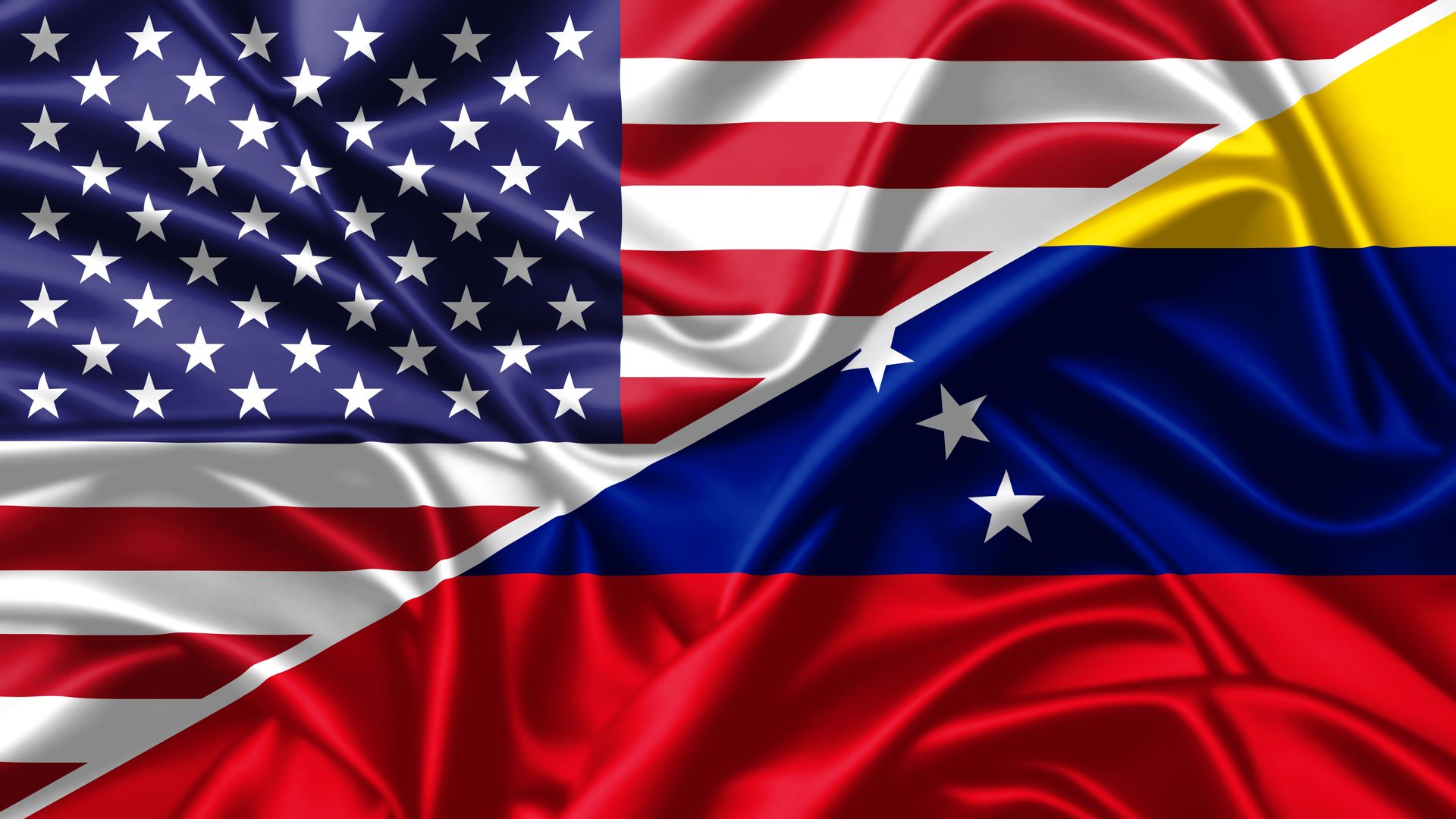
The political tension in Venezuela is climbing again, and this time the world is watching with a level of attention that President Nicolás Maduro has not faced in years. The United States has intensified its anti-drug and anti-trafficking operations throughout the Caribbean, and the most recent development, the seizure of a Venezuelan-linked oil supertanker, has vaulted the new page of the conflict into a very public spotlight. The U.S. Coast Guard boarded and seized the tanker off the coast of Venezuela under a federal warrant tied to sanctions violations and illicit oil trade. The ship was loaded with nearly two million barrels of crude oil. The seizure was executed legally and decisively, and it caught the Maduro government completely off guard. This move is not isolated. It is part of the Trump administration’s broader effort to dismantle the financial systems that keep Maduro afloat, illegal drug trade and illegal oil alike. These networks often intersect with drug trafficking groups, sanctioned foreign militaries, and illicit oil trading webs that funnel money into Venezuela’s ruling elite. By targeting the routes that keep these networks alive, Washington is applying pressure in the one place where authoritarian regimes tend to feel it most. Their coffers. Maduro’s response was predictable, but it revealed a major weakness rather than strength. He called the seizure an act of piracy and theft, accusing the United States of violating Venezuela’s sovereignty. He delivered the statement with a level of anger that suggests how deeply this operation was successful and struck at his inner circle. When a leader relies so heavily on underground trade to keep his government running, a public and high-profile seizure of this magnitude threatens more than revenue. It threatens his credibility with the very entities, elites, and military brass he depends on. President Trump has made it clear that the United States will keep escalating pressure until Maduro either steps aside or loses the financial capability to maintain his regime. The message is simple. If you engage in illegal trade with Caracas, expect to get your ship and your cargo seized, and your future access to global markets shuttered. Nations that have looked the other way in the past are now reconsidering the risk. Tanker operators, middlemen, and foreign governments that once treated Venezuelan trade as a quiet opportunity are starting to ask whether it is worth the attention of American courts and the U.S. Coast Guard. The seizure of the tanker is a turning point because it signals that maritime operations are no longer just focused on active drug operations, and are clearly not saber rattling. They are active, public, and increasingly effective. No closed-door sanctions meeting sends a message as strongly as a full oil tanker being escorted away under U.S. authority. Venezuela is losing the ability to hide what it exports, how it exports it, and who enables the flow. This moment represents a shift in the conflict. Maduro is cornered financially. His allies are now watching their own exposure. His government is scrambling to craft a narrative that no one outside of Caracas believes. Meanwhile the United States is growing more confident in operations that target the regime’s economic lifelines. If this pattern continues Maduro will face a choice that becomes narrower each day. Either step down and leave the country voluntarily or wait for the internal and external pressures to collapse what remains of his rule. President Trump’s strategy is producing visible effects that even his critics cannot ignore. Illegal trade is becoming more expensive. The costs of supporting Maduro are rising. The international community is watching a leader lose leverage in real time. With every interdiction, every drug boat hit, and every tightened sanction the message is reinforced. The United States is serious about dismantling the networks that fund corruption, drug trafficking, and authoritarianism in Venezuela. The pressure is only increasing; and it is clear, Maduro knows it. Ryan Parada is a Partner and the Chief Government Affairs Officer for Connector, Inc. where he oversees both domestic and international portfolios. He is a policy expert for our clients in numerous areas, including national security, energy, and the tobacco industry.

College football realignment has never been about tradition, heritage, or “student-athlete welfare.” It has been about what it has always been about: money. Lots of it. Tower-of-cash, Scrooge-McDuck, Olympic-size-swimming-pool-of-TV-revenue money. And nobody pretends otherwise. When USC and UCLA bolted the Pac-12 for the Big Ten, every commentator in America shrugged and said, “Smart move.” More money, more exposure, more national games. Sensible. Strategic. Zero blame. When Texas and Oklahoma packed up the moving van and headed to the SEC, the reaction was the same: “Smart move.” Get the bag. Secure the future. Maximize brand value. Good business. But when Notre Dame — which has more athletic revenue and brand equity than any program in the nation not named Alabama or Ohio State — chooses not to join a conference, suddenly the chorus changes. Now it’s: “Join a conference!”“They don’t deserve a playoff shot!”“This is what they get!” Let’s be honest: those arguments are just peanut butter and jealous. Notre Dame has the TV contract everyone else wishes they had. NBC didn’t leave them. The fans didn’t leave them. The ratings didn’t leave them. They didn’t realign because they didn’t have to. The program didn’t implode, the stadium didn’t empty, and the brand didn’t shrink. If anything, independence preserved what made Notre Dame valuable in the first place. If other teams could pull off independence financially, they would. They can’t. So they join conferences and split TV money ten or twelve ways. Notre Dame doesn’t. If that makes people salty, that’s a them problem. About that bowl game . . . Skipping an exhibition bowl — and that’s what these are now — was not only sensible, it was borderline enlightened. Players get time to heal instead of spending Christmas week getting concussed for a bowl named after a regional HVAC distributor. Coaches can recruit instead of preparing for a game nobody remembers 48 hours later. Staff can see their families. And boosters don’t have to fly to a city they only pretend to like because ESPN said it mattered. Everyone wins. Except the “THIS IS AN OUTRAGE!!!” crowd on social media, who apparently believe 19-year-olds owe them a postseason performance in perpetuity.Tulane and James Madison? Let’s be serious. Tulane is a fine institution. James Madison is a fine institution. Their fans should be proud. But nobody, and I mean nobody who is not already three drinks deep into a glass of Notre Dame haterade, believes these teams field better football programs than Notre Dame. If the goal of the College Football Playoff is to select the best teams in America, then anyone arguing Tulane and JMU belong ahead of Notre Dame needs to turn in their voter card and pick up a foam finger from the bargain bin. The CFP isn’t driven by money? Fascinating. On the bright side, the CFP selection committee has finally demonstrated that their decisions are not driven exclusively by financial incentives. Because if money were the driving force, Notre Dame — with its national ratings, enormous alumni base, and unmatched brand power — would be treated like a golden lottery ticket, not a scheduling inconvenience. Instead, Notre Dame got squeezed out while realignment refugees with shiny new conference affiliations got rewarded. Fascinating indeed. Frag out. Notre Dame didn’t get punished for scheduling, for results, or for talent. They got punished for being independent — the same independence that makes the program valuable, marketable, and stable. If Texas, Oklahoma, USC, and UCLA can make business decisions without being labeled unworthy, so can Notre Dame. And if the selection committee wants credibility, maybe don’t pretend Tulane and JMU are suddenly titans of the sport. Until then? Frag out. Chris Faulkner, a United States Marine Corps veteran (1991–2001), serves as a Senior Advisor at Connector, Inc. where he leans on nearly three decades of winning campaigns to advise our clients on their political efforts and goals. He and his wife, Angela, live outside Knoxville, Tennessee with their poodle and pit bull, and are proud parents of three adult sons.

When President Donald J. Trump returned to the Oval Office in January of 2025, the world was no longer confronting or encountering a United States adrift – it was engaging with a United States that was reasserting itself after four years of strategic confusion, ideological vanity, and avoidable decline. The Biden-Harris administration had left behind a global landscape defined by weakness masquerading as diplomacy: a proxy war in Eastern Europe with no defined objective, emboldened terrorist networks across Africa and the Middle East, transnational criminal organizations operating with near impunity, and adversaries who had learned correctly that American retaliation was uncertain, delayed, weak, or entirely absent. President Donald J. Trump’s return did not merely signal a change in tone . . . it marked the restoration of a governing philosophy that had been tested during his first term and refined during his political discontinuity. Within weeks, it became clear that the President was not simply improvising foreign policy. He was executing a new doctrine – a doctrine grounded in realism, sovereignty, deterrence, and a belief that peace is preserved not through accommodation, but through strength that is credible, visible, and decisive. The Trump Doctrine operates with one core principle from which everything filters through and from: America will have peace through unyielding strength. The United States has seen many doctrines established, thrive, and fizzle throughout our 250-year history. Some of them we all know well (the Monroe Doctrine) and some are more obscure (The Roosevelt Corollary). However, the America we find ourselves in today requires a new heading and approach to the world stage we see before us. It no longer makes sense for us to maintain the post-Cold War consensus that America only exists to manage the world’s problems rather than defending its own interests. For decades, policymakers in both parties – but especially Democrats – embraced a foreign policy that treated American power as a resource to be rationed among international institutions, global initiatives, and perpetual stabilization efforts abroad. The result was predictable: endless deployments, endless spending, and diminishing returns for the American people. It isn’t a surprise then when the leader of the America First / Make America Great Again movement rejects that framework entirely. Strategic sovereignty – the idea that the United States alone determines when, where, and how it deploys its power – is the Trump Doctrine’s first spoke off of that hub principle of peace through unyielding strength. This does not mean retreating from the world or cowering in fear of threats to our homeland. It means restoring and reordering priorities. Under the Trump Doctrine, American engagement abroad is justified only when it advances clearly articulated U.S. interests: the safety of American citizens, the integrity of U.S. borders, the security of the homeland, and the preservation of the American economy and American military dominance. This distinction matters. Where previous administrations sought legitimacy from multilateral consensus, President Trump seeks results. Where Democrats confuse moral posturing with leadership, President Trump insists on outcomes. And where Joe Biden viewed American power as something to apologize for or restrain, President Trump views it as the indispensable stabilizing force in a dangerous and unpredictable world. The phrase “peace through strength” is often invoked but rarely understood. The core concept originated with the Romans in the late 4th century with their doctrine: Si vis pacem, para bellum – If you want peace, prepare for war. The concept continued to mature and evolve as Europe did ultimately becoming conventional wisdom in realist international relationships. Machiavelli argued that weak states invited aggression towards them while Hobbesian Realism treated power as the ultimate guarantor of order. When the concept of “peace through strength” reached America, we saw it appear strategically in President George Washington’s emphasis on preparedness and Alexander Hamilton’s Federalist arguments for a standing military. But it is Senator Barry Goldwater who introduced the phrase into our common political vernacular during his 1964 presidential campaign when he used the phrase to campaign on the need for military superiority over the Soviet Union and the rejection of unilateral disarmament. Then, President Ronald Reagan institutionalized the concept and the phrase in conservative politics using it to justify building up our national defenses, nuclear deterrence, and his strategic defensive initiatives. Under the Trump Doctrine, it is neither a slogan, an applause line, nor a nostalgic nod to President Reagan. It is an operational philosophy. Peace is not maintained by signaling restraint. It is maintained by convincing adversaries that escalation will be met with overwhelming and immediate consequences. During the Biden years, adversaries tested American resolve precisely because they doubted it existed. Iranian proxies attacked United States assets, terrorist organizations rebuilt networks, and cartels expanded operations. Each test was met with delay, handwringing, or symbolic responses – reinforcing the perception that American power had lost its edge. President Donald J. Trump’s second term has corrected that perception quickly. From the outset, the administration made clear that American red lines would be enforced – not negotiated, not studied, not deferred. This does not mean indiscriminate use of force. On the contrary, the Trump Doctrine rejects blunt, large-scale military occupation as a default tool. Instead, it embraces decisive, disproportionate response when deterrence fails. Strength, under this doctrine, is not measured by the duration of deployments or the number of bases maintained abroad. It is measured by whether adversaries alter their behavior. And increasingly, they have. Perhaps the most misunderstood element of the Trump Doctrine is its approach to military force. Critics reflexively accuse President Donald J. Trump of recklessness, yet the doctrine itself is built on restraint – not in the sense of hesitation, but in the sense of discipline. The Trump Doctrine categorically rejects nation-building as a strategic objective. The United States does not exist to remake foreign societies, referee civil conflicts, or subsidize governments incapable of securing their own territory. These fantasies consumed trillions of dollars and thousands of lives over two decades, and they produced neither stability nor gratitude. Instead, President Trump has reoriented the military toward precision deterrence: targeted, lethal force designed to eliminate specific threats, disrupt operational capacity, and restore deterrence – without permanent occupation. This approach has been evident in renewed counterterrorism operations against jihadist networks in Africa, where United States strikes have focused on leadership decapitation, logistical disruption, and intelligence-driven targeting rather than troop-heavy presence. It has also shaped the administration’s reframing of transnational criminal organizations – particularly drug cartels – as national security threats rather than mere law enforcement problems. Under the Trump Doctrine, threats are addressed at their source. Sovereignty is not an excuse for inaction when hostile actors operate with state tolerance or complicity. This marks a fundamental shift from the risk-averse posture of the Biden era and signals to adversaries that geographic distance no longer provides insulation from consequence. Doctrines matter only when they are institutionalized. The Trump Doctrine is not rhetorical or theoretical . . . it is embedded in policy. The 2025 National Security Strategy (NSS) formalizes the administration’s approach by explicitly prioritizing threat elimination over conflict management, deterrence over de-escalation theater, and strategic repositioning over inertia. The document acknowledges what Washington, D.C. has long refused to admit: that America’s military footprint must evolve to meet modern threats, not remain frozen by legacy commitments and outdated assumptions. The NSS emphasizes flexibility, speed, and clarity of mission. It authorizes force when necessary, withdraws it when objectives are met, and refuses to sustain deployments solely to avoid criticism from the foreign policy establishment. It also introduces a broader conceptual shift – recognizing that threats to American security are no longer confined to traditional battlefields but include non-state actors, criminal networks, and asymmetric challengers willing to exploit American hesitation. This strategy does not seek endless confrontation. It seeks predictability – the kind that deters adversaries because they know precisely what will happen if they cross the line in the sand America has drawn. To understand the Trump Doctrine, we must first confront the vacuum it replaced. Under Joe Biden’s autopen, American foreign policy lacked hierarchy. Every crisis was treated as equally urgent – and therefore none were resolved. Ukraine received unlimited funding without a strategy for victory or peace. Terrorist threats were “managed” rather than eliminated. Adversaries learned that escalation carried little risk, while our allies learned that American leadership was inconsistent, ineffective, and conditional on domestic political optics. President Donald J. Trump and his doctrine restored hierarchy. Not every conflict matters equally nor deserves our full attention. Not every ally warrants unconditional and unlimited support. And not every threat requires the same response. By distinguishing between core interests and peripheral concerns, the Trump Doctrine reintroduces strategic discipline into American statecraft. The author Tom Clancy might have unknowingly best summarized the Trump Doctrine nearly twenty years ago in his novel Executive Orders. Towards the end of that book, his character, President Jack Ryan, is speaking to the world after a military battle between the United States of America and the fictional country United Islamic Republic when he says: “Finally, and I say this to all nations who may wish us ill, the United States of America will not tolerate attacks on our country, our possessions, or our citizens. From this day forward, whoever executes or orders such an attack, no matter who you are, no matter where you might hide, no matter how long it may take, we will come for you. . . . To those who wish to be our friends, you will find no more faithful friend than we. To those who would be our enemies, remember that we can be faithful at that, too.” – Tom Clancy’s President Jack Ryan This is not cruelty. It is realism. And realism, not sentimentality, is what prevents war. Peace through unyielding strength establishes the foundation – not the full architecture – of the Trump Doctrine. It defines the principles that guide this foreign policy realignment and guide America’s actions: sovereignty, deterrence, precision, and unapologetic strength. It explains why the United States must act decisively when threatened and why endless restraint invites chaos rather than peace. There is more to the Trump Doctrine though. It extends into economic statecraft, alliance management, and hemispheric strategy. But none of that works without the core premise established here: America must once again be feared by its enemies and respected by its allies – not pitied by both. Ultimately, the Trump Doctrine restores that balance and in doing so, it restores the conditions for peace. Rob Burgess is a national Republican strategist, and Chief Executive Officer at Connector, Inc. – a boutique government relations and political affairs firm with offices in Washington, D.C.