
When the Weather Stress-Tests the Energy System
Rick Westerdale • February 9, 2026
What extreme cold reveals about resilience, reliability, and real energy security.
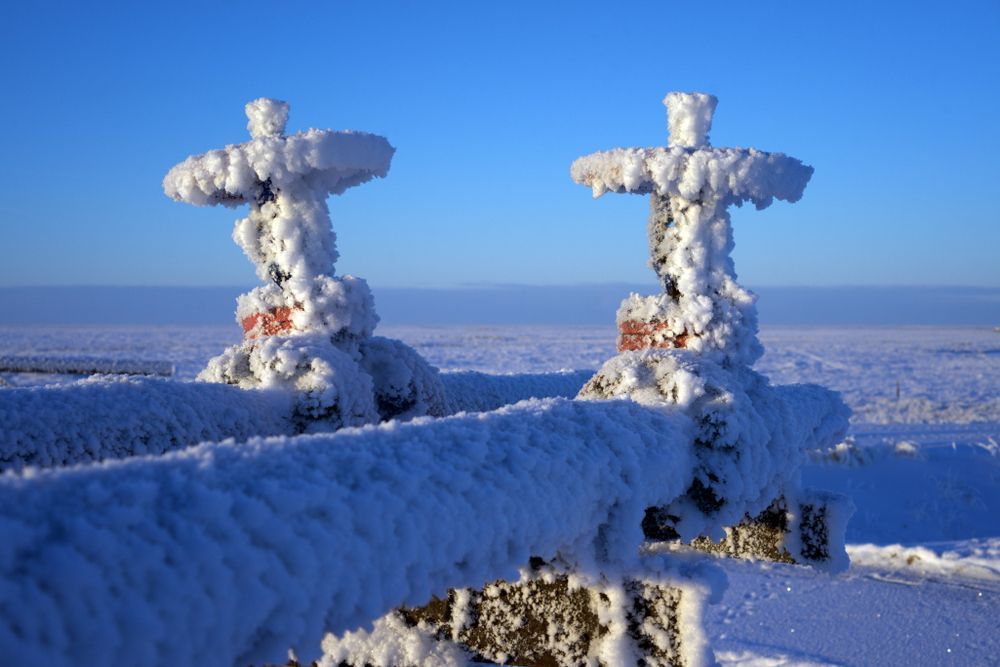
Every energy system looks resilient — until it is tested.
Right now, extreme winter weather across much of the United States is doing exactly that: stress-testing the oil, natural gas, and power systems in real time. The headlines are familiar — production shut-ins, gas price spikes, grid strain — but the lesson runs deeper than any single storm. Weather like this doesn’t just disrupt supply . . . it exposes where the energy ecosystem is structurally vulnerable and where comfortable assumptions fail under pressure.
This is not a hypothetical exercise. It is happening now.
In recent days, severe cold has temporarily knocked out as much as one to two millions barrels per day of United States oil production, largely due to freeze-offs and infrastructure constraints in major producing regions. Natural gas production and flows have been curtailed at precisely the moment heating demand surged, pushing prices sharply higher. Power grids have come under strain as demand peaks and generation outages mount.
Importantly, this is not system collapse. But it is unmistakable system stress — and repeated stress without adaptation is how failures eventually form.
On paper, none of this should be surprising. According to the Energy Information Administration (EIA) and the International Energy Agency (IEA), global oil markets remain adequately supplied. U.S. crude production is at record levels and inventories are not historically tight. Spare capacity exists and forecasts suggest manageable balances.
And yet, the system is bending.
That gap — between what balance sheet simply and what infrastructure delivers under stress — is where energy security is actually tested.
Weather as a Reality Check, Not an Anomaly
Energy planning is built on averages: average demand, average production, average utilization. Forecasts are indispensable for understanding long-term trends, but they rely on a critical assumption — that infrastructure functions as designed.
Weather does not respect that assumption.
Extreme cold doesn’t care that inventories are adequate or that spare capacity exists somewhere in the system. When temperatures plunge, pumps freeze, compressors fail, processing plants trip offline, and power plants lose fuel assurance or operating stability. Energy that “exists” on paper becomes energy that cannot move.
This is the difference between installed capacity and deliverable energy — a distinction that only becomes visible under stress.
Weather compresses timelines. It removes the luxury of gradual adjustment. And in doing so, it reveals how little margin for error modern energy systems actually have.
Street does not equal failure. But, repeated stress without structural reinforcement eventually produces it — and markets price that trajectory long before systems visibly break.
Oil: Record Production, Thin Buffers
The United States oil sector illustrates the point clearly. American production has never been higher, and shale remains a powerful source of supply over time. But shale is not an emergency switch. Freeze-offs can remove meaningful volumes almost instantly, and restoring them requires functioning infrastructure, labor, and time.
A temporary loss of one or two million barrels per day may not sound catastrophic in a global market exceeding 100 million barrels per day. Markets react sharply though because they understand what is being revealed: buffers are thinner than they appear.
Global spare capacity is concentrated in a small number of producers and regions. Weather-related outages in the United States removes one of the system’s most flexible components just as other risks remain unresolved. What looks like surplus quickly becomes exposure.
Years of capital discipline and efficiency optimization have improved returns — but they have also reduced slack, redundancy, and tolerance for disruption. Markets helped create the exposure they now fear.
Natural Gas: Tight When It Matters Most
Natural gas markets are even more sensitive to extreme weather. Cold snaps hit supply and demand simultaneously. Freeze-offs reduce production and pipeline throughput just as heating demand peaks.
The EIA has long noted that U.S. gas markets are increasingly shaped by the interaction of weather, power generation, and export demand. This winter reinforces that reality. Storage withdrawals accelerate, regional bottlenecks emerge, and prices move rapidly.
Gas markets do not fail quietly. They transmit stress directly into electricity markets and household heating bills. When gas tightens, energy insecurity becomes immediate and personal.
This stress is intensified by demand rigidity. When homes must be heated, hospitals powered, and industry kept running, demand does not politely adjust to price signals. In those moments, supply flexibility — not market balance — determines outcomes.
Power Grids, People, and the Texas Lesson
No modern discussion of winter stress tests is complete without recalling Texas and ERCOT.
The 2021 winter storm exposed profound vulnerabilities in the Texas power system — insufficient winterization, poor fuel coordination, and market structures that prioritized efficiency over resilience. The result was widespread outages and tragic consequences.
That failure mattered because it forced change.
Since then, Texas has taken tangible steps to harden its system. Generation assets have been winterized. Fuel supply coordination has improved. Reliability standards have been strengthened. While no grid is immune to extreme conditions, ERCOT today is materially better positioned than it was just a few years ago.
That matters for two reasons.
First, it confirms that resilience is not accidental. It must be designed, regulated, staffed, and paid for in advance. Second, it underscores that failures are diagnostic. They reveal weaknesses that can be addressed — if there is the will to do so.
But infrastructure alone is not the full story. Resilience also depends on people: trained operators, maintenance crews, grid managers, and emergency coordinators. These human systems cannot be surged overnight. When weather hits, the speed and quality of response often determine whether stress becomes failure.
Across the country, power systems are being pushed harder by extreme weather, rising demand, and tighter operating margins. Recent storms have again forced grid operators to manage outages measured in tens of gigawatts. These are not edge cases. They are signals.
What Forecasts Don’t — and Can’t — Capture
None of this means the EIA or the IEA are wrong. Their forecasts describe likely balances under expected conditions. They are not designed to capture short-duration, high-impact disruptions that expose how tightly coupled the system has become.
Resilience only becomes visible under stress.
Weather events like this winter are not statistical outliers. They are previews of how modern energy systems behave when efficiency collides with physics.
Beyond Weather: Compounding Stress Tests
Weather is only one stress test.
The same vulnerabilities exposed by extreme cold are exploited by other disruptions: geopolitical escalation, shipping chokepoints, infrastructure sabotage, cyber incidents, or sudden demand shocks. In each case, the system is judged not by how much energy exists, but by how quickly and reliably it can respond.
These risks do not arrive one at a time. They overlap.
A cold snap can coincide with geopolitical tension. A supply disruption can occur while grids are already strained. In that environment, energy security is not a static condition — it is a function of speed, redundancy, and deliverability under pressure.
Markets understand this intuitively. That is why prices react sharply to stress tests, even when inventories appear comfortable.
Stress Tests Are Signals Telling Us to Pay Attention
This winter’s weather is more than a headline . . . it is a signal.
It shows where infrastructure is fragile, where redundancy is thin, where labor and response capacity are constrained, and where policy assumptions collide with physical reality. If extreme cold can meaningfully disrupt oil, gas, and power systems at the same time, then the margin for error in energy planning is far smaller than many assume.
When energy systems stumble, consequences extend well beyond prices. They ripple into inflation, public confidence, and trust in institutions tasked with managing risk.
The next stress test may come from heat waves, storms, cyberattacks, or geopolitical miscalculation. The question markets are already asks is not whether the next test will come — but whether the system will be better prepared when it does.
Energy security is not measured in averages. It is measured in performance under pressure.
Rick Westerdale has more than 30 years of experience across the federal government as well as in the global energy industry. As a Vice President at Connector, Inc., a boutique government relations and political affairs firm based in Washington, D.C., Rick advises clients on strategy, investment, and policy across healthcare, hydrocarbons, LNG, hydrogen, nuclear, and the broader energy transition.