
A Worthwhile American Lesson for Germany
Chris Faulkner • December 17, 2025
Why approaching military service as an identity and not just as employment creates a strong country.
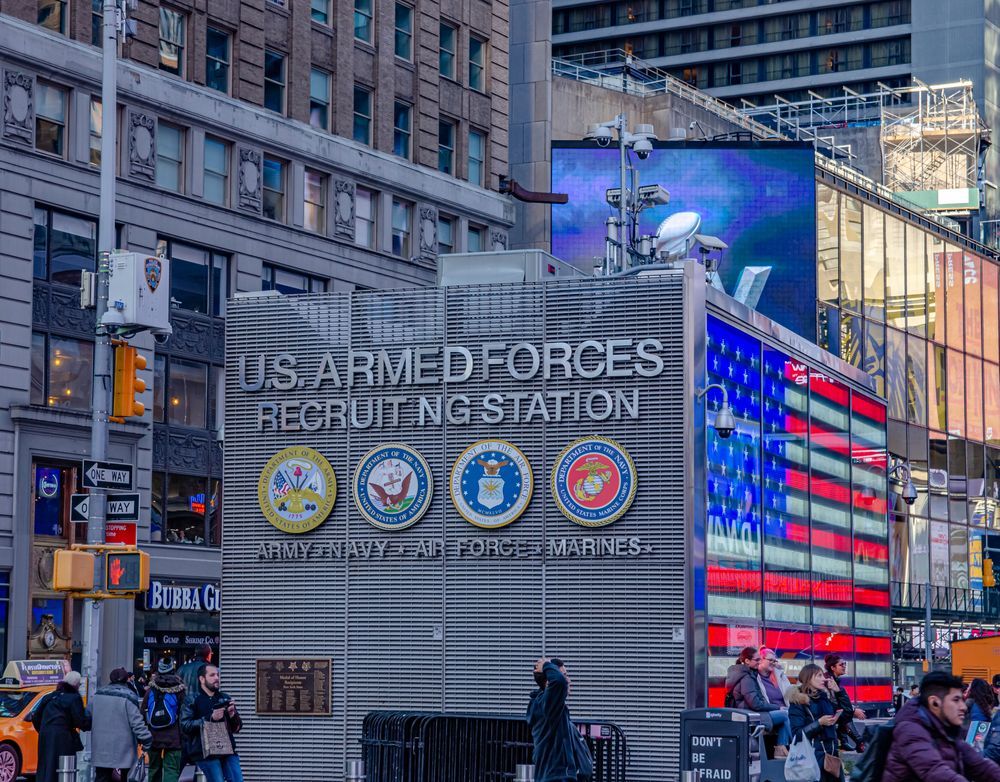
For well over 100 years, the United States military has been one of our country’s most powerful engines of integration. Immigrants – Irish, Italian, Filipino, Korean, Mexican, Ukrainian, West African, and dozens more – have served in the American armed forces in every conflict since the Civil War. Today, roughly 1 in 5 U.S. service members is either foreign-born or the child of immigrants.
This American model works because it treats military service as a pathway to national identity rather than simple a job and a paycheck. Citizenship, college benefits, job training, and long-term family stability are woven into service and with those things, a simple message is delivered:
If you step forward to defend the Land of the Free and the Home of the Brace, this country will step forward for you.
Yet, it is not like this in every country. Germany, for example, still struggles with a different (and older) mindset – one where citizenship is a prerequisite for service, rather than something that service can help cement. While yes, it is true that this has shifted in recent decades, the echoes of the past remain. Many young Germans of Turkish, Syrian, Kurdish, Afghan, or Balkan descent and backgrounds may feel German in daily life yet see few people like themselves in the Bundeswehr.
If the United States has accomplished anything through its approach, it’s that participation and representation in our armed forces is not merely symbolic . . . it directly affects recruitment, trust, and the sense of belonging needed desperately for a modern military to thrive.
The Power of an Integrated Force
The United States military learned long ago that a diverse force is a stronger force. Immigrant soldiers bring language skills, cultural awareness, and lived experiences that have made the U.S. more adaptable in deployments from Iraq to the Pacific Ocean. Diversity is not treated as a luxury within our nation’s ranks – it is treated as strategic depth.
Germany faces its own version of this challenge. Twenty percent of its population has an immigrant background, but their presence in the Bundeswehr trails far behind that benchmark. As Germany works to rapidly expand its military personnel, ignoring this vast pool of potential talent is neither practical nor sustainable.
Where Germany Could Adapt to the American Approach
There are a series of steps that Germany could take to begin adapting to the American approach to military service.
- Make Service a Clearer Pathway to Belonging
- The United States grants expedited citizenship for non-citizen enlistees during specific programs. Germany does not need to replicate this exactly, but it can create a more visible bridge between military service and a national identity.
- Recruit Where Immigrant Communities Actually Live
- American military recruiters walk the same neighborhoods, high schools, and community centers where immigrants grow up often. German recruitment often remains more centralized and less present in diverse communities.
- Elevate Success Stories
- The United States military constantly highlights decorated soldiers, officers, and commanders of immigrant origin. Germany rarely does the same, even though they exist.
- Acknowledge the Strategic Value of Diversity
- Language skills, cultural competencies, and global perspective are not “nice extras” – they are national assets in intelligence, diplomacy, cybersecurity, and logistics.
A New Social Contract for a New Germany
Germany doesn’t need to mimic America’s every approach. Its culture and history are different; its legal frameworks are different; its strategic environment is different. But the underlying lesson transcends borders.
A national that asks immigrants to integrate must also create institutions where that integration can happen. Few institutions accomplish this more powerfully than military service. As Germany rebuilds its armed forces for a more dangerous century, it has a chance to do something transformative – to turn military service into a shared institution for all Germans, not just those whose families have been here for generations.
If Berlin chooses to seize that opportunity, it won’t just strengthen the Bundeswehr – it will strengthen the country itself.
Chris Faulkner, a United States Marine Corps veteran (1991–2001), serves as a Senior Advisor at Connector, Inc. where he leans on nearly three decades of winning campaigns to advise our clients on their political efforts and goals. He and his wife, Angela, live outside Knoxville, Tennessee with their poodle and pit bull, and are proud parents of three adult sons.