
Economic Sanctions . . .
Rick Westerdale • December 22, 2025
Are they effective diplomacy or economic warfare?
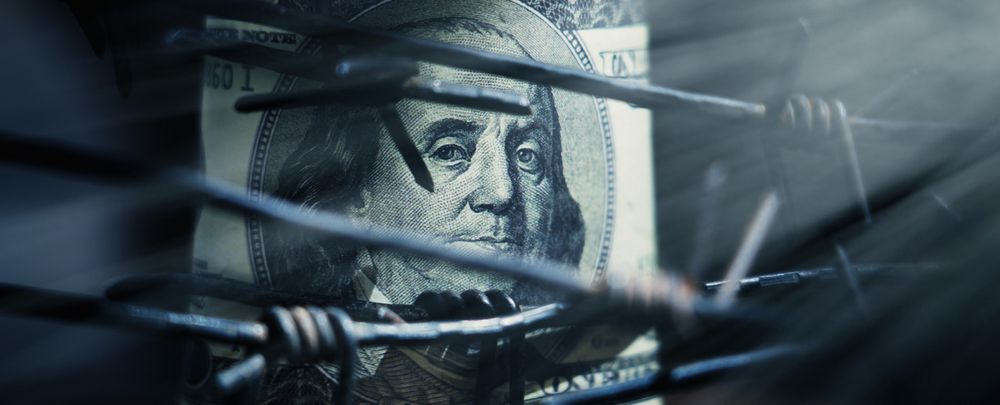
For over a century, economic sanctions have offered a bloodless alternative to war - a scalpel meant to deter malign actors and enforce global norms. But in the 21st century, as the scope and scale of sanctions balloon to cover a third of the globe, we must ask: are sanctions still effective tools of diplomacy, or have they become blunt-force weapons of economic warfare that inflict more harm than help?
Sanctions are not new. From ancient trade boycotts to the League of Nations’ embargoes and Cold War-era blockades, nations have long wielded economic pressure. But the post–World War II period saw sanctions evolve into a core instrument of American foreign policy. In recent decades, especially after the 9/11 attacks and Russia’s invasion of Ukraine, the U.S. has developed a sanctions architecture of unprecedented breadth and technical sophistication - covering individuals, entities, entire sectors, and even national oil companies, enforced through the global financial system and U.S. dollar hegemony.
Do sanctions work? The short answer: sometimes. The longer answer is more complicated.
Multilateral, targeted sanctions, those focused on specific actions and actors, have occasionally succeeded. The most-cited example is apartheid-era South Africa, where coordinated international pressure helped prompt political reform. Similarly, targeted sanctions contributed to Iran’s engagement in the 2015 nuclear deal negotiations. But blanket embargoes or unilateral moves often fail. The U.S. embargo on Cuba remains a prime example of prolonged economic pain with little political gain. Iraq in the 1990s suffered humanitarian catastrophe without achieving regime change. Even in the case of Russia, despite extensive sanctions following the 2022 invasion of Ukraine, its export revenues and military posture remain robust.
Nowhere are sanctions more prominent than in the energy sector. U.S. sanctions on Russia, Iran, and Venezuela collectively target 3-4 million barrels of crude oil per day. These measures aim to starve regimes of their lifeblood revenues, but they also reshape global trade flows. Russia, for example, now sells oil to India and China at a discount, evading Western restrictions via “shadow fleets” and insurance workarounds.
These actions reveal a paradox: sanctions do hurt, but they also push nations to build alternative systems. China is expanding renminbi-denominated oil trade. BRICS countries are exploring non-dollar payment platforms like BRICS Pay. Cryptocurrency rails and bilateral currency swaps are growing. Overuse of sanctions may inadvertently accelerate the unraveling of the very global financial order that gives sanctions their power.
Sanctions rely on financial exclusion: denying access to U.S. dollar clearing, correspondent banking, and networks like SWIFT. But countries have adapted. Russia has SPFS, China has CIPS, and India and Iran are building regional alternatives. Meanwhile, cryptocurrency and non-KYC platforms offer a digital path around sanctions, though not without detection risks.
These workarounds don’t replace the dollar-dominated system, but they do weaken it. More importantly, they allow sanctioned regimes to survive, if not thrive.
Even close allies are beginning to chafe under the weight of unilateral U.S. secondary sanctions. Emerging powers increasingly see sanctions not as tools of justice, but as instruments of American coercion. Poorer nations caught in the crossfire may suffer unintended economic harm. Without a strong multilateral framework, sanctions risk undermining the very coalition cohesion that makes them effective.
Sanctions remain a useful lever; but they must be deployed judiciously and strategically. Here are four recommendations:
- Multilateral First: Work through coalitions and international bodies. Sanctions gain teeth when enforced collectively, not unilaterally.
- Define Exit Ramps: Sanctions without clear goals or pathways to relief become permanent punishment, not diplomatic leverage.
- Close the Loopholes: Invest in enforcement, oversight, and regulatory modernization to address new evasion tactics, including crypto and non-dollar rails.
- Modernize the Architecture: As alternatives to SWIFT and dollar clearing expand, the U.S. must help write the rules of the next system or risk being written out of it.
Sanctions can still work - but only if used as part of a broader diplomatic strategy. When overused or poorly targeted, they do more harm than good - entrenching adversaries, encouraging innovation in evasion, and fragmenting the postwar financial order America built. The time has come to recalibrate.
Let us not abandon sanctions but restore them to their rightful place: as a scalpel, not a hammer. Precision, not volume, is what drives results.
Rick Westerdale has more than 30 years of experience across the federal government as well as in the global energy industry. As a Vice President at Connector, Inc., a boutique government relations and political affairs firm based in Washington, D.C., Rick advises clients on strategy, investment, and policy across healthcare, hydrocarbons, LNG, hydrogen, nuclear, and the broader energy transition.