
Happily Never After for NYC: Part II
Corey Stevens • November 14, 2025
The city that never sleeps just hit the snooze button — hard.
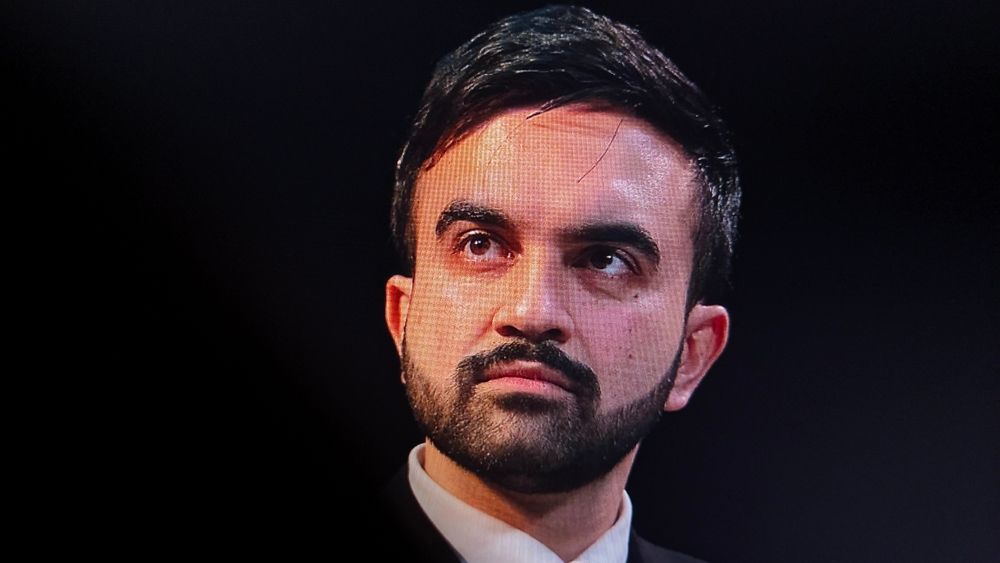
New York didn’t merely elect a new mayor; it endorsed an ideology that treats prosperity like a dirty word and government like God. If you’re tempted to shrug this off as just another blue-city soap opera, don’t. Zohran Mamdani’s victory is an inflection point for American politics, and the ripple effects won’t stop at the Hudson.
Mamdani brands himself plainly: “I’m Muslim. I’m a democratic socialist.” The first part is his private faith — in a nation that rightly protects it. The second part is the public program voters just elevated to the most powerful city hall in America. That ideology — not his religion — is the point of contention. It is a project to retrofit New York into a test lab for European-style social engineering with a Manhattan accent: government as landlord, grocer, banker, and prosecutor. He didn’t hide behind his playbook. He sold it. And a frustrated electorate bought it.
As a political strategist, I find it genius. As an American patriot, I find it horrifying. Agitate, disrupt, embolden, redistribute — these are the defining words of Mamdani’s New York state of mind. Agitate the resentments of a younger generation that’s been told achievement is rigged, prices are fixed, and landlords are the enemy. Disrupt the institutions—police, private enterprise, merit—that once made the city livable, vibrant, and upwardly mobile. Embolden an activist class that confuses noise for progress. Redistribute not just wealth but control: where you live, what you pay, what you’re allowed to build, how you’re allowed to hire.
The promises are familiar: “universal” this and “city-run” that. Publicly owned grocery stores — because bodegas run by families for decades apparently need a commissar. “Safe use” sites that normalize open-air drug culture while neighborhoods absorb the fallout. A city hall that treats policing like targeted bullying but treats taxes like a never-ending slush fund. It’s the romance of revolution packaged as government closest to the people.
And yet here’s the paradox every socialist experiment eventually meets in the American context: New York’s greatness has always been voluntary. Capital didn’t come here at gunpoint; talent didn’t move here for mandates. They came for opportunity. Mamdani’s ideology asks those very people — the ones who create jobs, take risks, and elevate neighborhoods — to accept more cost, less safety, and fewer rights over the hard work that is supposed to pay off. That’s not a governing coalition; that’s a doomsday clock.
Because in a global, digital economy, capital is more portable than ideology. If you make it hostile to build, invest, or hire in New York, those decisions won’t wait four years to cast another ballot. They’ll vanish by the next quarter. Wall Street doesn’t need to plant a flag in Midtown to thrive anymore; tech doesn’t need a Manhattan ZIP code to recruit; film and media can shoot wherever the incentives are sweeter and the regulators are practical. The city that once advertised “If you can make it here, you can make it anywhere” may be about to test the inverse: “If you make it impossible here, they will make it elsewhere.”
Public safety will be the first pressure point. You can’t wish away the reality that every thriving neighborhood rests on a simple covenant: streets are safe, laws are enforced, and criminals face consequences. The further city hall drifts from that covenant, the faster families adjust their plans. They abandon public transportation. They change schools. They move zip codes. Commerce follows the family. Tax revenue follows the commerce.
Housing will be the next breaking point. The socialist cure for high rents is always control — caps, freezes, “emergency” powers that never sunset. But the simple laws of supply and demand can’t materialize under hijack. It materializes when the risk-reward calculus favors building something — an idea, a business, a building, a dream. Equal has always been unfair. “Equality” for the masses is Power to the Politicians, not Power to the People.
And then there’s the short-term relief but long-term disaster of government-as-everything. When city hall promises to be your grocer, your landlord, and your insurer, it morphs citizens into clients. It replaces the dignity of earned success with the dependency of managed outcomes. That is not compassion; it is control.
I say all this not as a coastal scold but as a Republican strategist who’s fought and won in places conventional wisdom writes off. New York’s choice, paradoxically, is an opportunity for the rest of America to see the difference between rhetoric and results in real time. Socialism reads beautifully on a palm card. It governs like chaos.
Here’s my prediction — and my warning.
First, a talent exodus. Quiet at first, then obvious: job creators leave, startups choose Austin, Nashville, Miami, or Phoenix, small businesses shelve expansions. Mamdani’s budget moonshot won’t come in a press release; it will creep its way into the mid-year revenue forecast and then explode into “temporary” tax increases that never go away.
Second, safety concerns. Fewer cops, lower morale, slower response times, and more wrist slaps. Residents relocate. Tourism slips. The business tax base thins.
Third, a political backlash. New Yorkers aren’t stupid. They tolerate bold ideas right up until it threatens their kids, their livelihoods, or their property values. When that line is crossed — when the “experiment” becomes a wallet buster — political appetites shift.
So yes, this was a triumph for the democratic socialists (and those who succumbed to their bully pulpit). But it is also a national tutorial. Elections are not “vibes”; they are choices — costly, measurable, lived. If Mamdani governs as he campaigned, New York will quickly learn what Europe failed to see at face value: you eventually run out of other people’s money.
The good news? Reality is the most persuasive political ad. When ideology meets consequences, voters recalibrate. My advice to Republicans: engage, don’t retreat — because time doesn’t stop for the snooze button, and New York City will have wasted it on a dream only possible when you’re fast asleep.
Corey Stevens is a seasoned campaign operative and respected national strategist having worked on successful local, state, and federal races throughout the southwest and western United States. He serves as Director of Accounts at Connector, Inc. — a boutique government relations and political affairs firm in Washington, D.C.