
How Big Pharma Broke the System — and How America Can Fix It
Rick Westerdale • November 10, 2025
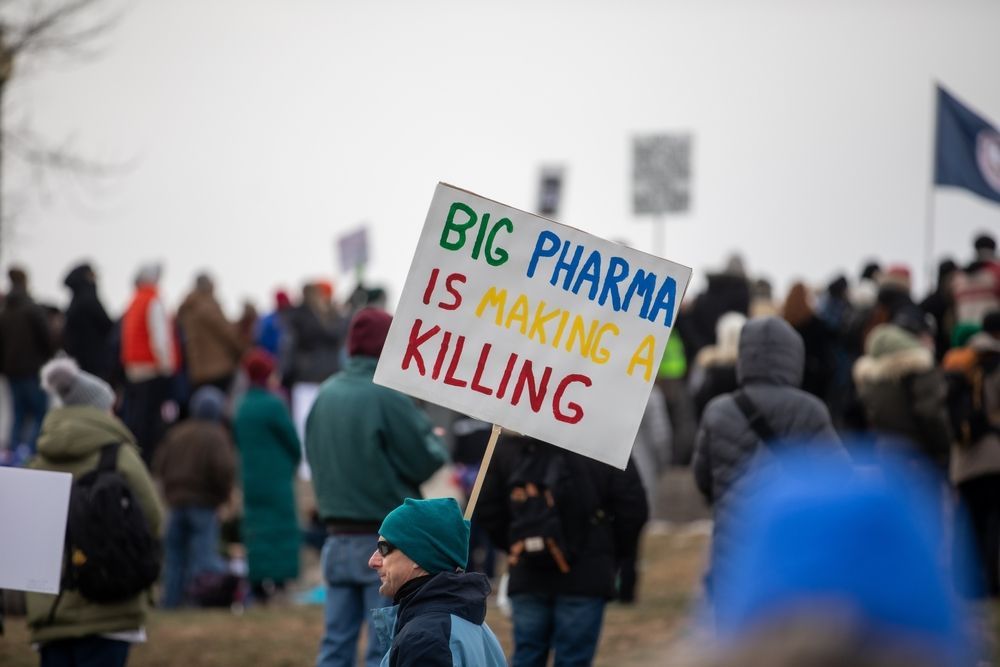
When you’re facing cancer, the cost of medicine can feel like the difference between hope and despair. After my own fight, I’ve seen how even well-insured families get squeezed: for privately insured patients, out-of-pocket costs jump about $600 per month on average in the six months after diagnosis — and the burden is highest at later stages. That’s not a statistic; that’s real pain, felt at kitchen tables across America. We can and should fix this — now.
Here’s the core truth: drug manufacturers set the prices, and they do it with near-total impunity. Every co-pay, every deductible, every bill at the pharmacy counter begins with the number they choose. They raise that list price year after year, even on medicines that haven’t changed in decades, and they do it because they can.
The Real Culprit: Big Pharma’s Pricing Power
Let’s stop pretending the problem lies anywhere else. Big Pharma manipulates the system from top to bottom — controlling prices, blocking competitors, and flooding Washington with lobbyists who keep reforms locked in limbo. The result is a market that rewards greed and punishes patients.
For years, drug companies have hidden behind the word “innovation.” But true innovation saves lives and creates value; it doesn’t bankrupt cancer patients or force seniors to split pills in half. What Big Pharma calls innovation is too often a clever accounting trick — a slightly tweaked formula, a new patent, or a new dosage that extends monopoly protection and keeps competitors out. That’s not science. It’s a scheme.
A Market Rigged Against Patients
This Administration and Health and Human Services (HHS) Secretary Robert F. Kennedy Jr. have taken some steps — like setting Most-Favored-Nation (MFN) pricing targets and launching real-time prescription price transparency tools. Those are good starts. But until we address the heart of the issue — the unchecked pricing power of Big Pharma — patients will continue to pay more than anyone else in the developed world for the same medicine.
Big Pharma’s playbook is simple:
- High list price → endless mark-ups. The higher they set the list price, the more money they make across every step of the supply chain. Patients are left paying co-pays and deductibles based on inflated, artificial numbers.
- Patent abuse → Companies make minor tweaks to old drugs — a new coating, a different dosage — and use those changes to file new patents that block generics and biosimilars from entering the market.
- Pay-for-delay schemes → They literally pay competitors to stay out of the marketplace, keeping prices high and patients hostage.
- Lobbying and advertising → The pharmaceutical industry spends billions more on marketing and political influence than on research and development. Americans effectively fund their own exploitation — paying higher prices so drugmakers can buy more members of Congress.
This is not the free market working. This is the free market hijacked — a cartel dressed up as capitalism.
Four Steps to Put Patients First
If America truly wants to make prescription drugs affordable again, we need bold reform that makes competition real and pricing transparent:
- Most-Favored-Nation Pricing at the Counter → Tie U.S. prices to what other advanced nations pay — and make sure every concession Big Pharma makes overseas shows up as savings for American patients at the pharmacy counter.
- End Patent Games → Ban evergreening and pay-for-delay deals. No company should get to extend a monopoly because they changed a pill’s color or tweaked its dosage.
- Fast-Track Generics and Biosimilars → Streamline FDA approvals so safe, lower-cost alternatives reach the market faster. Every month of delay costs patients billions.
- Real-Time Transparency → Require full price disclosure between doctors, patients, and pharmacies. Americans deserve to know what a drug costs — before they’re handed the bill.
Holding Big Pharma Accountable
Public opinion is already there. Across the country, voters of every political stripe want tougher price discipline and point squarely at Big Pharma as the driver of high costs. They’re not wrong. Americans don’t want another press conference or a political talking point — they want lower prices where it matters: at the counter.
Two tests matter most:
- Are we curing more disease?
- Are we doing it at prices that keep medicine within reach for every American?
Those goals are not contradictory; they’re the definition of a functioning market. Pharmaceutical companies should absolutely profit from breakthroughs — but not by gaming patents, hiding prices, or charging Americans triple what they charge everyone else.
The America First Standard
Our healthcare system should serve patients, not corporate profits. For decades, Big Pharma has treated American patients as its personal ATM — setting global prices based on how much it can squeeze out of us. That has to end.
An America First approach to prescription drugs means restoring competition, enforcing transparency, and demanding accountability from the most powerful industry in Washington. It means rejecting the false choice between innovation and affordability. We can have both — if we have the courage to take on Big Pharma’s stranglehold and return fairness to the system.
The American people are ready. The question now is whether Washington has the backbone to act.
Because when it comes to saving lives, we should be fighting cancer — not the people who price the cure out of reach.
Rick Westerdale has more than 30 years of experience across the federal government as well as in the global energy industry. As a Vice President at Connector, Inc., a boutique government relations and political affairs firm based in Washington, D.C., Rick advises clients on strategy, investment, and policy across healthcare, hydrocarbons, LNG, hydrogen, nuclear, and the broader energy transition.