
Investing in AI Infrastructure: Boom or Bubble?
Rick Westerdale • November 20, 2025
We find ourselves in a global race with diverging playbooks.
Editor’s Note: I would like to offer my sincere and deepest apologies to Rick Westerdale for not having this post edited and scheduled to deploy in a timely manner. This article was submitted late last week and was supposed to run Monday. Had it, Rick Westerdale would have pre-empted Nvidia’s quarterly earnings that signaled the AI boom is not over. — RKB
Historical Context – Lessons from Past Booms
The AI buildout invites echoes of earlier infrastructure rushes. In the 1990s, a fiber-optic buildout by telecoms ended in massive overcapacity when demand failed to materialize. Similarly, a turn-of-century data-center boom spurred a wave of new gas-fired power plants – only to see demand collapse after the dot-com bust, leaving stranded capacity and ratepayers on the hook. Energy bubbles have occurred too: in the 2000s venture capital poured $100B+ into renewables and clean tech (the “Green Bubble”) before many companies collapsed. History suggests that overcapacity, not technology failure, ends these cycles: hype and investment surge, then shake out investors, and ultimately new uses emerge. AI today may rhyme with these stories: massive spending could presage a correction before new uses fully materialize.
Staggering AI Spending
Today’s AI investment is unprecedented. Analysts report that the largest U.S. tech firms projected roughly $370 billion in 2025 capex on data centers and related AI infrastructure – far exceeding any past peacetime buildout. Microsoft alone spent ~$35B in one quarter, nearly half its revenue, largely on new data centers. Global private AI investment likewise surged: the Stanford AI Index notes U.S. companies poured $109.1B into AI in 2024 (more than 10x China’s $9.3B). This wave of spending is reshaping economies: estimates suggest AI-related capex drove nearly all U.S. GDP growth in H1 2025 and accounted for 75% of recent S&P500 earnings growth. These numbers underscore how deeply a few hyperscale projects dominate investment flows (often concentrated in Northern Virginia, Texas, etc.) – and why warnings of an “AI bubble” are growing louder.
Building these vast facilities is altering capital markets. In one cautionary sign, major AI firms now routinely use off-balance financing (spinning projects into SPVs or issuing new debt) to fund data centers. Analysts note parallels to the telecom bubble: “the path from here to there will not just be ‘up and to the right,’” JP Morgan writes, fearing a repeat of the fiber overbuild where revenues lagged expectations. A recent study suggests 95% of companies saw zero ROI on initial GenAI projects despite $30–40B in spending, hinting that much of the money has yet to show real returns. As former tech executives caution, today’s AI surge blends fact and speculation.
Data Centers and Energy Infrastructure
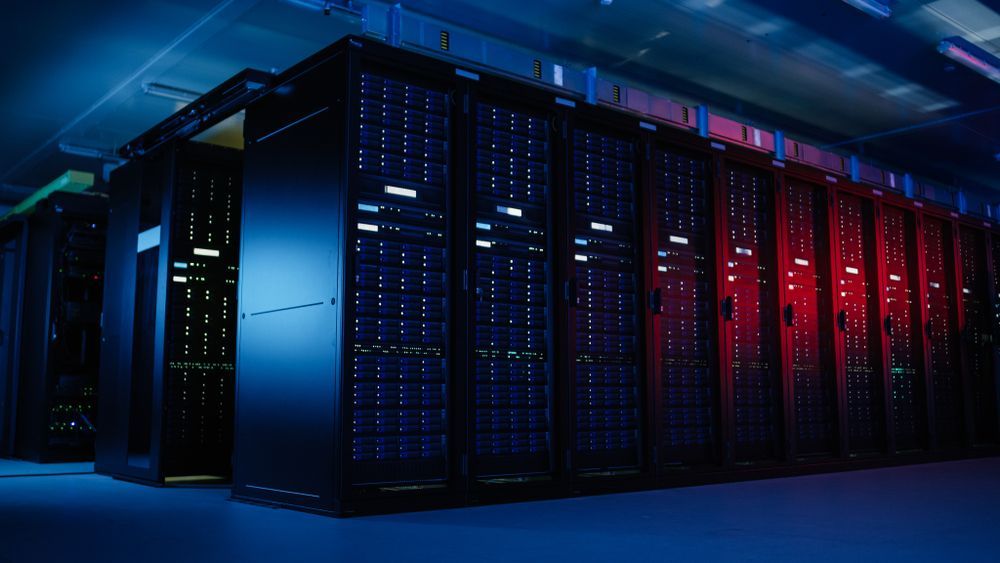
AI’s rise is as much about infrastructure as algorithms. Data centers – essentially specialized factories for computation – embody both real estate and utility projects. These centers require huge electrical power and cooling. Pew Research finds U.S. data centers already consumed 183 terawatt-hours in 2024 – over 4% of national electricity. That share is projected to more than double by 2030, exceeding 12% of U.S. power if current trends continue. In energy-intensive AI clusters, one hyperscale center (with tens of thousands of GPUs) may use more electricity than 100,000 homes. These facilities also require immense cooling and water: data centers directly used ~17 billion gallons in 2023 (mostly at hyperscale sites).
This energy demand stresses grids. Utilities in data-center hubs like Virginia’s “Data Center Alley” have already seen minutes of outages during AI training runs, and regulators report rate requests increasing by tens of billions to upgrade infrastructure. Reports note that “the U.S. simply isn’t building enough grid capacity” to power all the new centers. Energy analysts warn of data centers built with servers installed but no fuel lines or transformers ready. Rising electricity costs also bite: one analysis estimates AI-related power needs drove a $9.3B price increase in the mid-Atlantic capacity market (raising monthly bills by ~$16–18 per U.S. household). Geographically, growth is uneven – Virginia data centers now use 26% of that state’s power supply, with similarly high shares in North Dakota, Oregon and others. These imbalances raise risk of local bottlenecks.
The energy mix matters too. Currently, about 40% of U.S. data center power comes from natural gas, 24% from renewables, 20% nuclear, 15% coal. Many major AI companies are contracting large amounts of renewable or nuclear energy to meet ESG goals, and some states are considering mandates for green power for new data centers. In Europe, regulators are already planning strict efficiency rules (an EU “Data Centre Energy Efficiency Package” to hit carbon-neutrality by 2030). This contrasts with, say, China, which is aggressively subsidizing energy for its tech firms to secure a lead. In short, energy policy will critically shape where and how AI scales – outages or policy shifts (e.g. rollback of renewables incentives) could strand planned projects, just as last century’s gas bust left unused plants.
Global Strategies and Geographies
The U.S. leads current AI investment, but other nations are mobilizing. The U.S. AI Action Plan (2025) calls for deregulating data-center permitting, building grid capacity, spurring chip production, and training talent. Notably, U.S. policymakers also talk of “AI export programs” and alliances to bind allies to American tech stacks. China’s strategy, by contrast, remains highly state-driven: it is building a National Integrated Computing Network to pool public and private data center resources, and has over 250 AI data centers announced as of mid-2024. Beijing offers heavy energy and capital subsidies to its tech giants, and even rolled out a special K-visa to attract global AI talent. Europe is playing catch-up; for example, a new Google-commissioned report urges the EU to triple its data-center capacity in 5–7 years (an estimated €400B investment) and to blend multiple cloud providers for sovereignty. Yet EU policies emphasize efficiency: the European Commission plans to enforce energy disclosures and carbon-neutral targets for data centers by 2030. These contrasting approaches – U.S. market-led expansion vs. China’s state subsidy vs. EU regulation – mean global competition and spillover: sites in Asia or Eastern Europe may attract overflow demand if U.S. or EU grids tighten, while U.S. tax incentives for clean energy in infrastructure (like DOE loan programs) may shape where companies build.
Financial Risks and Bubble Dynamics
Bubble Indicators: Many signs point to speculation. Valuations are sky-high: a recent seed-round where no product existed ($2B at a $10B valuation) drew stunned reactions, and investors note that “today’s market is driven overwhelmingly by momentum”. Hyperscalers are reportedly shifting capital expenditures off-balance-sheet into SPVs to smooth earnings. HBR notes that recent 2025 mega-deals (e.g. Nvidia investing $100B into OpenAI data centers) look like 1990s-style circular financing among vendors. A JP Morgan analysis warns that even if AI capex continues, annual AI revenues would have to hit $650B by 2030 just to earn 10% returns – an implausibly large consumer surplus. If it doesn’t, analysts fear a telecom-style crash: “repeat of the telecom and fiber buildout experience, where the revenue curve failed to materialize,” they warn.
Concentration & Debt: The AI sector is extremely concentrated, which increases contagion risk. A few “Magnificent Seven” tech companies dominate AI spending and hold the talent and data. At a 2025 summit, CEOs warned that AI hype “mixes fact with speculation”. Data-center projects have some worrisome finance: GPUs (the core asset) rapidly depreciate as new chips arrive yearly, and tenants must upgrade mid-lease, exposing builders to tenant churn. Debt is rising: even though giants can self-finance, many new data center deals are leveraged, often opaquely. The think tank Center for Public Enterprise notes that off-balance debt in SPVs “are cause for concern” and that a downturn could cascade through this interlocked system. An AI market collapse could be vast: one analyst suggests up to $20 trillion in global market cap could vanish, far beyond pure AI firms. In short, there will be winners and losers – and (as investors caution) likely many significant losers once the bubble bursts.
The Quantum and Tech Frontier
Some ask whether quantum computing will leapfrog classical AI infrastructure. Experts argue that quantum is more a complement than an imminent substitute. Quantum excels at certain optimization and simulation tasks, and as systems scale, they can deliver far more computational power per watt than today’s GPUs. In the long run, large quantum-assisted AI platforms could slash energy needs. However, today’s quantum machines still require extreme cooling and are small-scale; most forecasts see quantum-accelerated AI (hybrid quantum-classical architectures) emerging only over the next decade. Thus, quantum computing is unlikely to make data centers obsolete in the near term – but it may ultimately upenddata-center economics (much as GPUs once replaced CPUs). Investors and planners should monitor this trajectory: supporting quantum R&D and hybrid computing infrastructure could pay off as AI demands mature.
Human Capital and Skills
Behind the hardware, human capital is critical. The U.S. remains a leader in AI talent and models, but faces fierce competition for researchers and engineers. China’s K-visa and domestic training programs (echoing its Made in China 2025 ethos) aim to close the gap by attracting foreign experts. The U.S. has responded with policies (e.g. STEM immigration reforms) and university funding, but many firms report talent shortages. OECD studies note that countries are scrambling to develop AI curricula, retrain workers, and fund research centers. For investors and policymakers, neglecting education could turn a temporary supply crunch into a bottleneck: robust AI requires not just megawatts and GPUs, but hundreds of thousands of skilled people. Measures like apprenticeships, visas, and domestic R&D grants will determine whether infrastructure investments translate into innovation.
Implications & Recommendations
- Prudent Incentives: Policymakers should avoid unchecked subsidies. The data-center surge shows that local incentives can attract projects, but tying local budgets to one sector is risky. Tax breaks and land deals should require guarantees of community benefit (e.g. electricity provision, jobs in diverse sectors). Hype-driven booms invite bailouts if expectations sour; wiser is to require contingency plans (e.g. contracts to repurpose facilities) so assets like idle data centers or power plants can be adapted, not abandoned.
- Energy Investment: Secure power must keep pace. Federal and state planners should expedite transmission upgrades and balanced generation. In the U.S., that means a mix of renewables, storage, and perhaps more nuclear: several tech firms are already contracting for carbon-free power, and even retiring nuclear plants are eyed for restart. Policies could incentivize co-location of data centers with renewable or microgrid projects, spreading risk. The recent gas-buildout parallel warns that overbuilding one fuel (gas plants) could be stranded if demand flattens. Therefore, transparency (requiring data centers to report energy use) and ratepayer protection (preventing isolated communities from bearing costs) are prudent.
- Financial Safeguards: Investors should stress-test AI projects against lower returns. Given JPMorgan’s projections, only a fraction of planned capex can yield sustainable profit. Pension funds and lenders should insist on realistic demand models and diversification (e.g. not funding only GPUs but also looking at risk-mitigating data-center assets). The bubble analysis above suggests concentration risk: one should monitor SPVs and inter-company financing (the “circular funding”) that could transmit shocks. Portfolio risk could be reduced by backing companies with proven cash flows (cloud providers offering AI services) rather than pure infrastructure speculation.
- Balance Long-term and Short-term View: Prepare for correction and legacy value. Even if many current projects overbuild, they may create future opportunities (new AI applications, or repurposing for other compute uses). As one advisor noted, “overcapacity builds the next era—but it wipes out the investors who paid for it.” Planning for the shakeout is wise: distressed assets (old power plants, excess fiber) could be acquired and repurposed in ways today’s investors don’t imagine. Governments might proactively buy up stranded energy or grid assets during downturns to ensure capacity for future needs.
- International Coordination: Finally, in this global game, U.S. leadership requires allies. The U.S. and EU could coordinate on data infrastructure standards (e.g. energy efficiency rules) and share investment burdens (e.g. joint ventures in safe AI compute). China’s more aggressive subsidies and open export policy mean a “race to the bottom” in subsidies is risky. A shared framework (perhaps via OECD or the AI alliance) might help align incentives, for example by defining “responsible AI-capable infrastructure” that qualifies for support only if it meets certain energy and transparency criteria.
Conclusion
The rapid buildout of AI data centers and chips resembles both the Internet-age fiber bubble and today’s energy transition booms. Huge bets are being placed on AI’s promise, but history warns that “technologies are real but timing is uncertain.” A balanced path forward recognizes the potential of AI to drive growth, while preparing for an overshoot. For investors, that means due diligence on ROI, diversified portfolios, and patience. For policymakers, it means modernizing grids and support without fueling pure speculation. By learning from telecoms, railroads, and power booms, today’s leaders can harness AI’s benefits – not by blind faith, but by pragmatic stewardship of money, power, and talent.
Rick Westerdale has more than 30 years of experience across the federal government as well as in the global energy industry. As a Vice President at Connector, Inc., a boutique government relations and political affairs firm based in Washington, D.C., Rick advises clients on strategy, investment, and policy across healthcare, hydrocarbons, LNG, hydrogen, nuclear, and the broader energy transition.