
Iran, Energy Security, and the Price of Escalation
Rick Westerdale • January 15, 2026
Why military action against Iran would test the global oil system and America's strategic doctrine.
Energy markets do not wait for clarity. They move on risk, credibility, and logistics — and nowhere is that more evident than in today’s standoff with Iran. Any military action involving Tehran, whether limited or expansive, would immediately reverberate through global oil markets. But the consequences would not stop at oil prices. They would test the foundations of energy security, inflation control, and the United States’ role as guarantor of global trade routes.
This moment is best understood not through abstract geopolitics, but through a modern corollary to the Monroe Doctrine — one articulated implicitly during the Trump Administration and still operative today: the United States will not tolerate hostile powers threatening strategic chokepoints, energy flows, or hemispheric economic stability. In the 21st century, that doctrine is enforced not only with naval power, but through energy dominance, resilient supply chains, and credible deterrence.
Iran sits squarely at the intersection of all three. Under the Trump Doctrine (as Rob Burgess laid it out in his previous three-part series: I, II, III), force is not deployed to manage escalation . . . it is deployed to end it.
The Strategic Reality: Oil is Still the Backbone of Global Stability
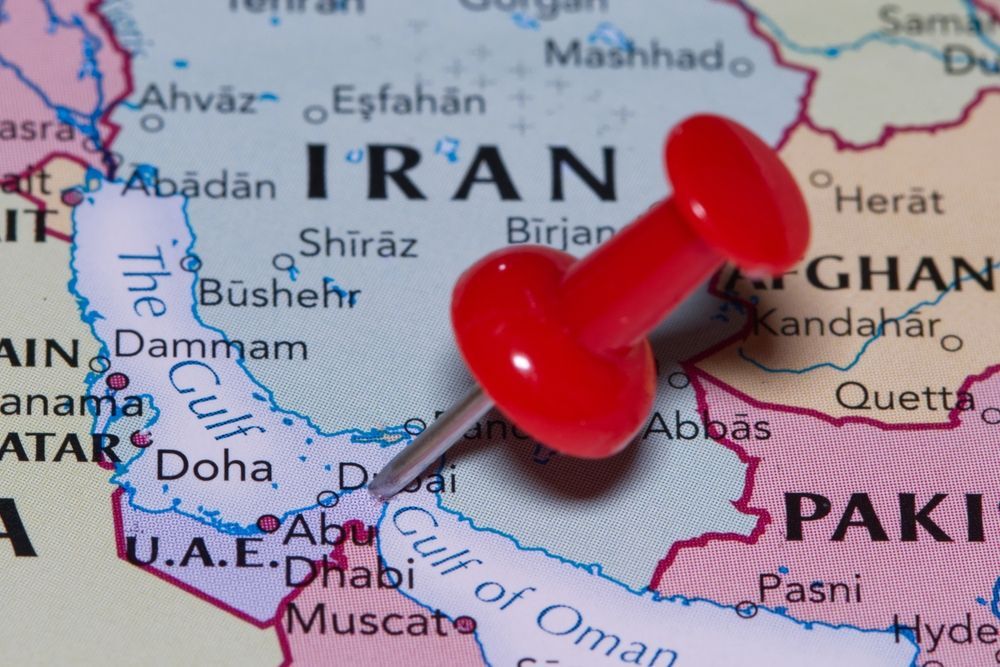
Despite years of energy transition rhetoric, oil remains the backbone of the global economy. Roughly one-fifth of the world’s petroleum consumption — about 20 million barrels per day — moves through the Strait of Hormuz, making it the most critical energy chokepoint on earth. Any credible threat to that corridor forces markets to reprice not just Iranian barrels, but the reliability of the entire global oil system.
This is not theoretical. Even short-lived disruptions — missile strikes, maritime harassment, cyberattacks, or insurance withdrawals — can tighten supply chains faster than producers can respond. Oil markets are global, prices are set at the margin, and logistics matter as much as geology.
The United States today imports relatively little crude directly from the Persian Gulf, but that does not insulate American households. Oil is priced globally. Refined products are traded globally. When disruption raises prices in Asia or Europe, U.S. consumers feel it at the pump, airlines feel it in jet fuel costs, and inflation resurfaces almost immediately.
Three Scenarios, One Common Theme: Risk Becomes Price
Scenario One: Limited Military Action — Price Shock Without Structural Damage
In the first scenario, military action is limited in scope and duration - targeted strikes, no sustained attacks on oil infrastructure, and no prolonged attempt to block shipping lanes. On paper, this is the “contained” case.
Yet even here, oil prices would rise sharply.
Markets would not be responding to lost supply so much as elevated risk. Tanker insurance premiums would increase. Freight rates would spike. Some shippers would delay sailings. Buyers would pull forward cargoes. All of this functions like a temporary supply cut even if production volumes remain unchanged.
In this scenario, prices could spike quickly — often overshooting fundamentals — before partially retreating as it becomes clear that flows continue. But the retreat would not be complete. Once a geopolitical premium is introduced, it tends to linger.
For U.S. households, the effect would be immediate but potentially short-lived: higher gasoline and diesel prices, airline fare pressure, and renewed inflation headlines. For allies in Asia — particularly Japan and South Korea, which rely heavily on Gulf crude — the impact would be more acute.
The lesson: even limited conflict raises costs, because markets price uncertainty faster than reassurance.
Scenario Two: Regional Escalation — When the Supply Chain Becomes the Weapon
The second scenario is more dangerous and more realistic: sustained regional escalation involving proxy forces, repeated maritime incidents, cyber disruptions, or episodic damage to energy infrastructure across the Middle East.
In this case, oil does not disappear — but it becomes unreliable.
Tankers hesitate. Insurers retreat. Ports slow. Refiners struggle to schedule deliveries. The problem is no longer how much oil exists, but whether it can be moved safely, on time, and at tolerable cost.
Here, spare capacity begins to matter - but only partially.
Yes, OPEC producers — primarily Saudi Arabia and the UAE — maintain several million barrels per day of spare production capacity. But spare capacity only stabilizes markets if it can be transported. Pipeline bypasses around Hormuz are limited, and alternative routes cannot replace the scale of seaborne exports.
Meanwhile, refined product markets tighten faster than crude markets. Gasoline, diesel, and jet fuel shortages emerge not because refineries lack crude, but because distribution systems are stressed. This is when price spikes become persistent rather than episodic.
For the U.S., this scenario brings a familiar pattern: rising fuel prices, pressure on consumer spending, and political urgency. For Europe, competition for Atlantic Basin crude intensifies. For Asia, governments turn to strategic stockpiles and emergency coordination.
This is the scenario where energy security overtakes climate and transition debates, because reliability becomes paramount.
Scenario Three: Sustained Disruption or Hormuz Closure — A True Oil Shock
The third scenario — sustained disruption of the Strait of Hormuz or direct attacks on major oil export infrastructure — would represent a systemic shock to the global economy.
Even partial obstruction matters. Markets do not require a full closure to panic. The credible threat of interruption is enough to send prices sharply higher, because inventories are finite and replacement routes are insufficient.
Iran’s own production — roughly 3 to 3.5 million barrels per day — would likely fall sharply in this scenario. But the real issue is not Iran alone. It is the vulnerability of Gulf exports more broadly.
Could spare capacity absorb the shock? Only partially, and only with time.
OPEC spare capacity can offset lost production, but it cannot instantly replace lost logistics. Strategic petroleum reserves can smooth short-term shortages, but they are finite and politically constrained. Demand destruction eventually occurs — but only after prices rise high enough to slow economic activity.
This is where oil shocks bleed directly into macroeconomic risk: inflation accelerates, growth slows, and policymakers face an impossible tradeoff between energy costs and economic stability.
The United States’ Interest: Energy Dominance as Strategic Deterrence
Through the lens of a Trump-style corollary to the Monroe Doctrine, this moment is clear. The United States has a vested interest in preventing hostile actors from weaponizing energy chokepoints — whether in the Western Hemisphere or beyond.
Energy dominance is not about cheap oil alone. It is about:
- Keeping trade routes open
- Preventing coercive pricing
- Protecting American households from external shocks
- Ensuring allies are not economically blackmailed
When energy flows freely, diplomacy works. When they don’t, instability follows.
What to Watch if Tensions Escalate
If military risk involving Iran increases, these indicators will matter more than headlines:
Strait of Hormuz Flow — Data Confirmed tanker movements and AIS data reveal reality faster than statements.
Tanker Freight Rates (VLCC and Suezmax) — Freight spikes often precede price spikes.
War-Risk Insurance Premiums — Insurance withdrawal is an early warning of systemic stress.
Crack Spreads (Gasoline, Diesel, Jet) — Refined products tighten before crude runs out.
OPEC Spare Capacity Signals — Watch actions, not announcements.
Strategic Petroleum Reserve Messaging — Credibility and coordination matter more than volume alone.
Risk is Already Being Priced
Markets are already signaling unease. The question is not whether prices would rise in a conflict involving Iran. They would. The real question is how long the premium lasts - and how well prepared governments, companies, and households are to absorb it.
Energy security remains national security. And in a world still powered by oil, deterrence at sea matters as much as diplomacy on land.
Rick Westerdale has more than 30 years of experience across the federal government as well as in the global energy industry. As a Vice President at Connector, Inc., a boutique government relations and political affairs firm based in Washington, D.C., Rick advises clients on strategy, investment, and policy across healthcare, hydrocarbons, LNG, hydrogen, nuclear, and the broader energy transition.
If you're interested in reading an even more in-depth analysis, feel free to read this.