
Iraq: Friend or Foe?
Rick Westerdale • January 10, 2026
Why it is critical we engage with Iraq now, not later.
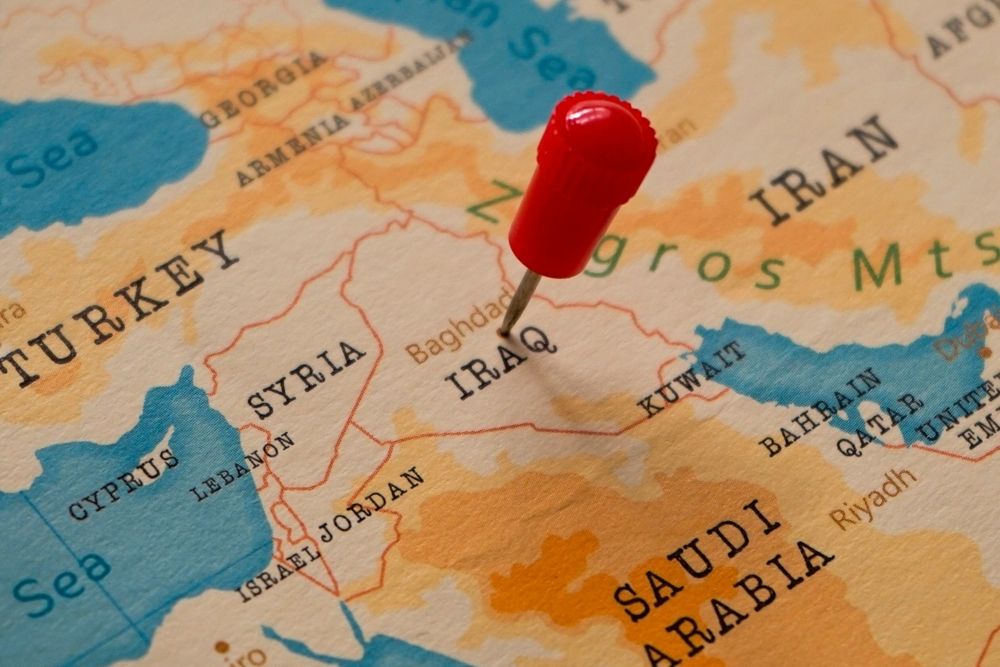
For U.S. policymakers, Iraq is often viewed through the rear-view mirror: a country defined by the blood and treasure spent after 2003, by unfinished business, and by a lingering question of whether Iraq ultimately tilts toward Washington or Tehran. That framing is understandable but increasingly outdated. As Iraq struggles through another difficult government-formation process, the United States faces a narrow but consequential window to re-engage Iraq as a partner in formation, not a problem to be managed from a distance.
The recent failure in parliament to elect a Second Deputy Speaker - an outcome that triggered public accusations of “betrayal” among governing coalition partners - highlights Iraq’s chronic political fragility. Disputes between Kurdish blocs, particularly between the KDP and PUK, and tensions within the ruling alliance led by Prime Minister Mohammed Shia’ al-Sudani underscore a familiar reality: in Iraq, elections are only the opening act. Power is forged afterward, through bargaining under the muhasasa system, where sectarian and ethnic balance often overrides party discipline or voter intent.
For Washington, this dysfunction is often cited as a reason for caution. It should instead be seen as a reason for engagement.
Iraq today is not choosing between stability and chaos; it is choosing between external dependence and internal consolidation. Iran understands this well. Its influence in Iraq thrives in moments of paralysis; when fractured coalitions, weak institutions, and delayed reforms create space for militias, patronage networks, and informal power. The question for the United States is whether it will remain a passive observer during government formation, or whether it will help tip the balance toward Iraqi sovereignty at precisely the moment institutions are being shaped.
Despite the political headwinds, Iraq is quietly laying the foundations of state capacity. Baghdad has implemented a sweeping digital transformation across more than 850 government entities, enabling the electronic exchange of millions of documents. This is not a cosmetic reform. Digitization directly attacks corruption, limits document fraud, and reduces the discretionary power that has long fueled patronage politics. For a country seeking independence from foreign influence, bureaucratic transparency is not technocratic - it is strategic.
Iraq is also signaling ambition beyond survival. Preparations to host the 2026 Arab Conference on the Peaceful Uses of Atomic Energy reflect a deliberate effort to reclaim scientific credibility and regional standing through civilian, internationally compliant pathways. This is scientific diplomacy - an assertion that Iraq intends to lead through institutions and expertise, not proxies or militias.
Economically, the picture is similarly mixed but promising. The launch of a new national airline, renewed railway links with Syria, and continued investment in oilfield development all point toward a country rebuilding connective tissue - internally and regionally. Oil will remain Iraq’s economic backbone, but how those revenues are managed during the next government’s tenure will determine whether Iraq strengthens its state or perpetuates its vulnerabilities.
Even in the Kurdistan Region, often portrayed solely through political infighting, there are signs of structural progress. Large-scale investment licensing and job creation demonstrate that, when governance aligns, Iraq’s regions can deliver tangible economic gains. At the same time, challenges like prison overcrowding and justice reform reveal why sustained institutional support, not episodic crisis diplomacy, is essential.
For the United States, the strategic logic is clear. Iraq that is economically connected, digitally governed, scientifically engaged, and politically supported during coalition formation is far more likely to resist Iranian overreach than an Iraq left to negotiate its future alone. Influence vacuums do not remain empty, and Tehran has proven adept at filling them.
Engaging now does not mean ignoring history or writing blank checks. It means recalibrating U.S. policy from withdrawal management to state reinforcement. That includes diplomatic presence during government formation, targeted technical assistance on governance and transparency, support for energy and infrastructure modernization, and clear signaling that Iraqi sovereignty - not proxy alignment - is the basis for partnership.
Iraq will not become a regional leader overnight. But disengagement all but guarantees it will remain a battleground for others’ ambitions. Engagement, especially during moments of political uncertainty, offers a different outcome: an Iraq that is imperfect, contested, but increasingly capable of standing on its own.
For U.S. policymakers, the choice is not whether Iraq has baggage. It does. The choice is whether to let that baggage define the future - or to recognize that moments of formation, not moments of crisis, are when influence matters most.
Rick Westerdale has more than 30 years of experience across the federal government as well as in the global energy industry. As a Vice President at Connector, Inc., a boutique government relations and political affairs firm based in Washington, D.C., Rick advises clients on strategy, investment, and policy across healthcare, hydrocarbons, LNG, hydrogen, nuclear, and the broader energy transition.