
Iraq's Strategic Moment
Part I: From Battleground to Strategic Partner
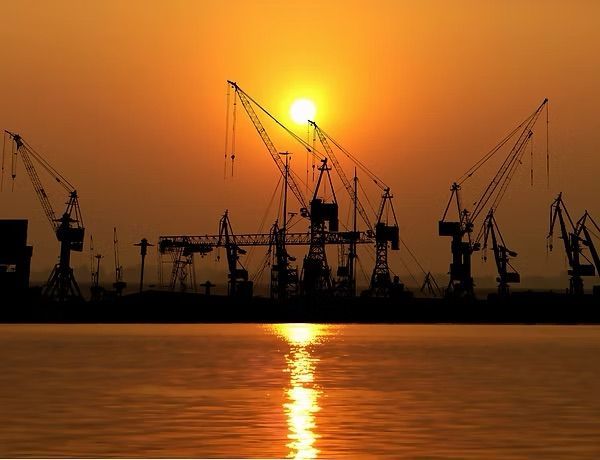
For more than two decades, Iraq has been viewed principally through the lenses of war, terrorism, reconstruction, and regional instability. American policymakers measured progress in troop levels, security operations, and counterterrorism campaigns. Iraqis measured progress by the restoration of basic services, security, and the hope that years of conflict would finally give way to prosperity.
Prime Minister Ali al-Zaidi’s recent visit to Washington suggests that both governments may finally be prepared to change that conversation.
The headlines understandably focused on more than $60 billion in announced agreements and memoranda of understanding between American companies and the Government of Iraq, much of it centered on energy, infrastructure, and economic development. The symbolism, however, was even more important than the investment itself. The visit signaled a deliberate effort to redefine the U.S. - Iraq relationship - not as one built primarily upon military cooperation, but increasingly upon commercial partnership, energy security, and long-term economic modernization.
Whether that ambition succeeds will depend less on the number of agreements signed than on whether Iraq can transform those commitments into lasting institutions, reliable infrastructure, and sustained economic growth.
That is why this visit deserves to be viewed as more than another diplomatic event. It represents a strategic inflection point - not only for Iraq, but for the United States and the broader Middle East.
Having worked on Iraq policy and energy diplomacy for more than two decades - from reconstruction efforts following 2003, through the development of American energy diplomacy, to today’s commercial engagement with both governments - I have learned that Iraq is consistently underestimated. Too often, discussions about Iraq begin and end with conflict. Rarely do they begin with opportunity.
That perspective is becoming increasingly outdated.
Today, Iraq finds itself at perhaps the most consequential crossroads in its modern history. It sits geographically and politically between the United States and Iran while simultaneously serving as a bridge between the Arab Gulf, Türkiye, the Levant, and Europe. It possesses one of the world’s largest hydrocarbon resource bases while simultaneously struggling to provide reliable electricity to its own citizens. It exports millions of barrels of crude oil each day yet continues to rely on imported natural gas and electricity to meet domestic demand. These contradictions are no longer simply economic challenges - they are strategic vulnerabilities.
Recent regional events have only reinforced that reality. Escalating confrontation between the United States, Israel, Iran, and Iranian-backed armed groups has placed Baghdad under increasing pressure to demonstrate that the Iraqi state - not competing militias - controls Iraqi territory and national security decisions. Prime Minister al-Zaidi has publicly committed his government to strengthening state authority and disarming unauthorized armed groups, even as regional tensions have made that task significantly more difficult.
This challenge is larger than internal security. It goes directly to the question of sovereignty. For decades, Iraq has often been forced into the role of geographic buffer between competing regional powers. Geography cannot be changed. Policy, however, can.
The real strategic opportunity before Iraq is not choosing between Washington and Tehran. It is choosing Iraq. That distinction matters.
Iran will always remain Iraq’s neighbor. Shared history, religion, trade, and geography ensure that constructive relations between Baghdad and Tehran will remain both necessary and desirable. Likewise, the United States will remain an indispensable source of technology, investment, finance, education, innovation, and global commercial relationships.
Neither relationship should require exclusivity.
Successful Iraqi foreign policy should not be measured by choosing one partner over another. It should be measured by Iraq’s ability to preserve sovereign decision-making while maintaining productive relationships with all.
Energy provides perhaps the clearest path toward achieving that objective. For decades, Iraq’s vast oil reserves have been viewed primarily as a source of export revenue. That perspective, while understandable, is increasingly incomplete. Energy is no longer simply a commodity. It has become an instrument of national power.
Reliable electricity underpins economic competitiveness. Natural gas supports industrial development. Pipelines influence regional diplomacy. Ports determine access to global markets. Tanker fleets strengthen commercial resilience. Maritime infrastructure protects national exports. Energy systems increasingly shape foreign policy as much as they generate government revenue.
In other words, energy security has become national security.
That observation applies equally to Washington. For much of the last twenty years, American influence in Iraq rested largely upon military cooperation and counterterrorism. Those efforts were both necessary and consequential. Yet history suggests that military relationships alone rarely produce enduring strategic partnerships.
Economic partnerships do. Power plants outlast troop rotations. Ports outlast deployments. Commercial investment creates constituencies that security cooperation alone cannot.
If Iraq succeeds in modernizing its energy sector, expanding domestic natural gas production, capturing currently flared gas, strengthening electricity reliability, modernizing its ports, rebuilding maritime capability, diversifying export routes, and creating an investment climate capable of attracting international capital, the United States will possess something far more durable than a military partnership.
It will possess a strategic economic partner at the center of the Middle East. That may ultimately become the most important outcome of Prime Minister al-Zaidi’s visit. The announced agreements themselves represent only the beginning.
Implementation remains the true test.
Iraq has experienced no shortage of memoranda, announcements, conferences, or ambitious development plans over the past twenty years. The challenge has rarely been vision.
It has been execution.
Successful implementation will require continued efforts to strengthen institutions, improve transparency, reduce bureaucratic barriers, provide security for investors, accelerate infrastructure delivery, and ensure that major national projects remain aligned with long-term Iraqi interests rather than short-term political cycles.
This applies equally to the United States. American policymakers should resist the temptation to evaluate Iraq exclusively through security metrics.
The next generation of U.S.–Iraq relations should instead be measured by different indicators:
- How many megawatts of reliable electricity have been added?
- How much associated natural gas is captured instead of flared?
- How many new export routes reduce strategic vulnerability?
- How much private investment reaches Iraqi industry?
- How many modern ports, logistics corridors, pipelines, and maritime assets connect Iraq to global markets?
- How many Iraqi jobs are created by those investments?
Those are ultimately the metrics of sovereignty. They are also the metrics of strategic partnership.
The Washington visit demonstrated that both governments increasingly understand this reality. The emphasis on energy, investment, infrastructure, and commercial engagement reflects a recognition that long-term stability cannot be achieved through security policy alone. It requires economic opportunity, institutional capacity, and reliable infrastructure that improves the daily lives of Iraqi citizens while strengthening the country’s strategic independence.
This is why I believe Iraq has reached a genuinely historic moment. Not because of the value of the agreements announced. Not because of the personalities involved. But because the conversation itself has changed.
For perhaps the first time since 2003, Iraq is being discussed not simply as a security challenge to be managed, but as a strategic partner capable of shaping regional stability through economic growth, energy leadership, and responsible statecraft.
Whether that promise is fulfilled will depend upon political courage, disciplined execution, and sustained partnership between Baghdad and Washington.
The opportunity is real. The work, however, has only just begun.
This article is the first in a series examining Iraq’s strategic transformation. Future installments will explore the specific policy choices that can convert this moment into lasting progress, including Iraq’s role as an emerging energy power, the strategic importance of electricity and natural gas, the modernization of Iraq’s maritime and export infrastructure, and how energy diplomacy can strengthen both Iraqi sovereignty and regional stability.
Rick Westerdale has more than 30 years of experience across the federal government as well as in the global energy industry. As a Vice President at Connector, Inc., a boutique government relations and political affairs firm based in Washington, D.C., Rick advises clients on strategy, investment, and policy across healthcare, hydrocarbons, LNG, hydrogen, nuclear, and the broader energy transition.