
Let’s Talk About Flock Cameras
Flock cameras are just the visible part of a much bigger surveillance question.
“(...) there comes a time in the history of nations when fear and complacency allow power to accumulate and liberty and privacy to suffer. That time is now.” - Senator Rand Paul, during his 2015 filibuster against the PATRIOT Act.
Before we jump into the hot topic, let’s establish what Flock is, and what it is not.
There has been a lot of discussion across American media, social media, city council meetings, and committee hearings about the growing use of automated license plate readers operated by Flock Safety. These discussions are often very heated in one direction or the other, but both sides might be missing what they are really arguing for. On its corporate website, Flock describes itself this way:
“Flock builds technology that helps communities deter crime, respond to emergencies, and investigate safety incidents. We believe communities shouldn’t have to choose between public safety and privacy.”
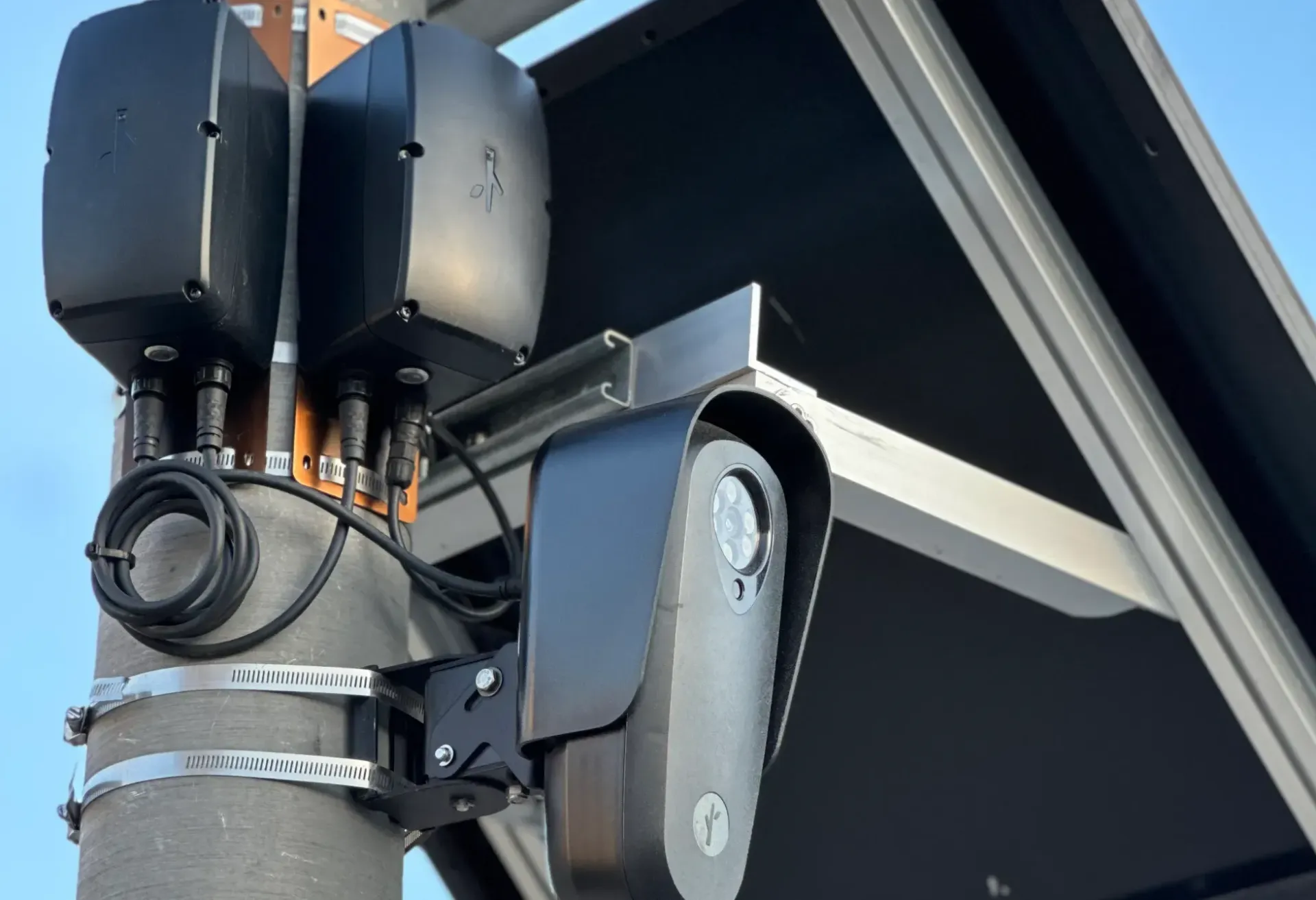
At their most basic level, Flock cameras and similar technologies are automated license plate readers. The cameras capture images of vehicles and license plates, noting information such as the date and time. Law enforcement agencies can then search that information as part of an investigation, tracking where someone was at a specific time. Flock also operates a large connected network, meaning that information gathered in one jurisdiction can be used by investigators elsewhere.
Each camera creates a point-in-time observation. Put enough of those observations together and something much more powerful begins to emerge: a record of where a vehicle has been seen, when it was there, and where it traveled next.
Flock also has privacy safeguards that should be acknowledged. Its current policy says searches are logged, customers control access and sharing, and License Plate Reader data is deleted on a rolling weekly basis by default unless a different retention period is required. Those safeguards matter. They do not eliminate the broader question of what happens when increasingly large networks of cameras make the movements of ordinary vehicles searchable.
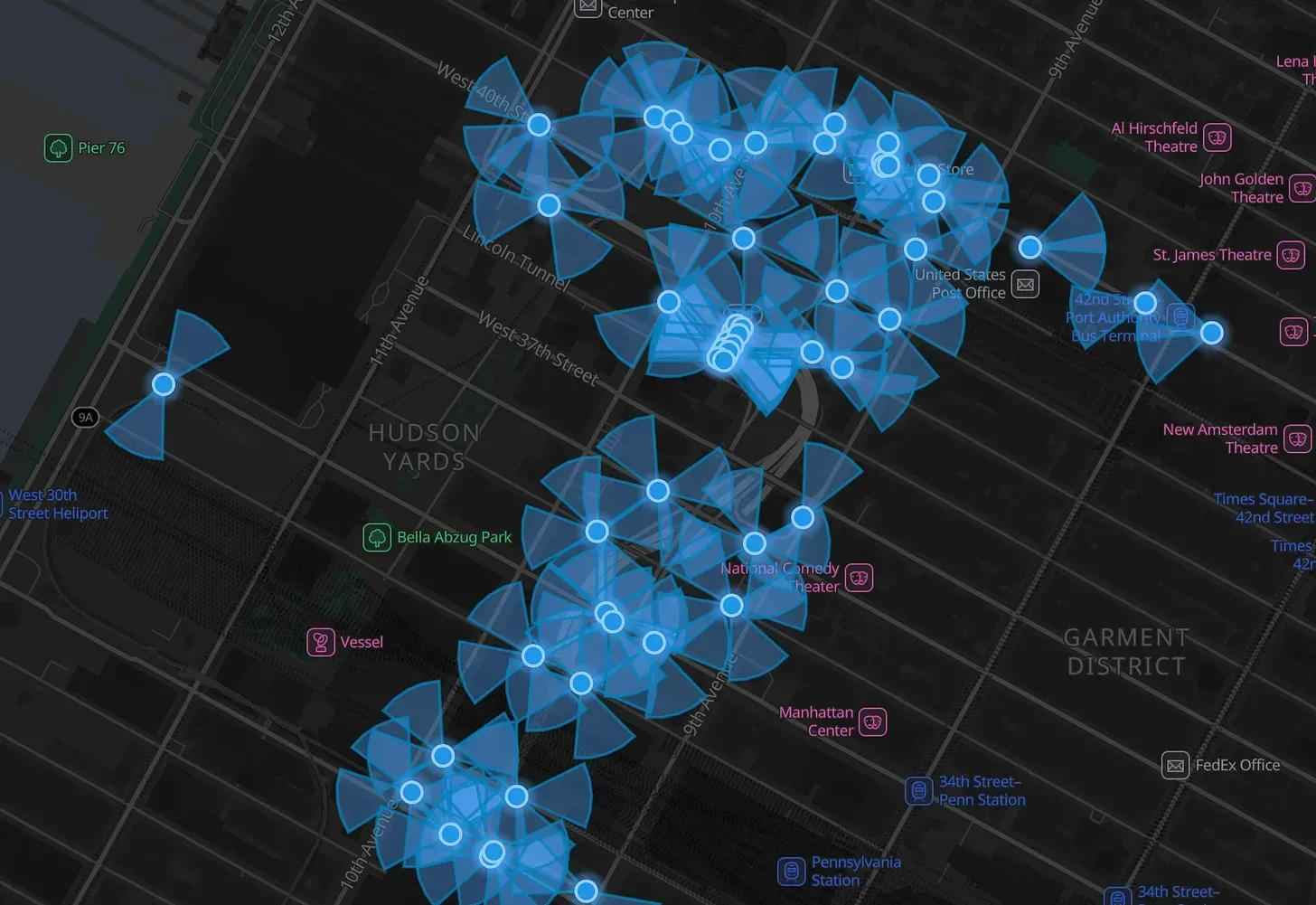
To get a sense of the scale, look at Hudson Yards in Manhattan around the Javits Center. According to DeFlock.org, which maps the locations and directions of license plate readers and similar cameras, coverage in a relatively small area can quickly become dense. One camera gives you one observation. Dozens of cameras across the same neighborhood give you something much closer to a pattern.
The national picture is even more striking.
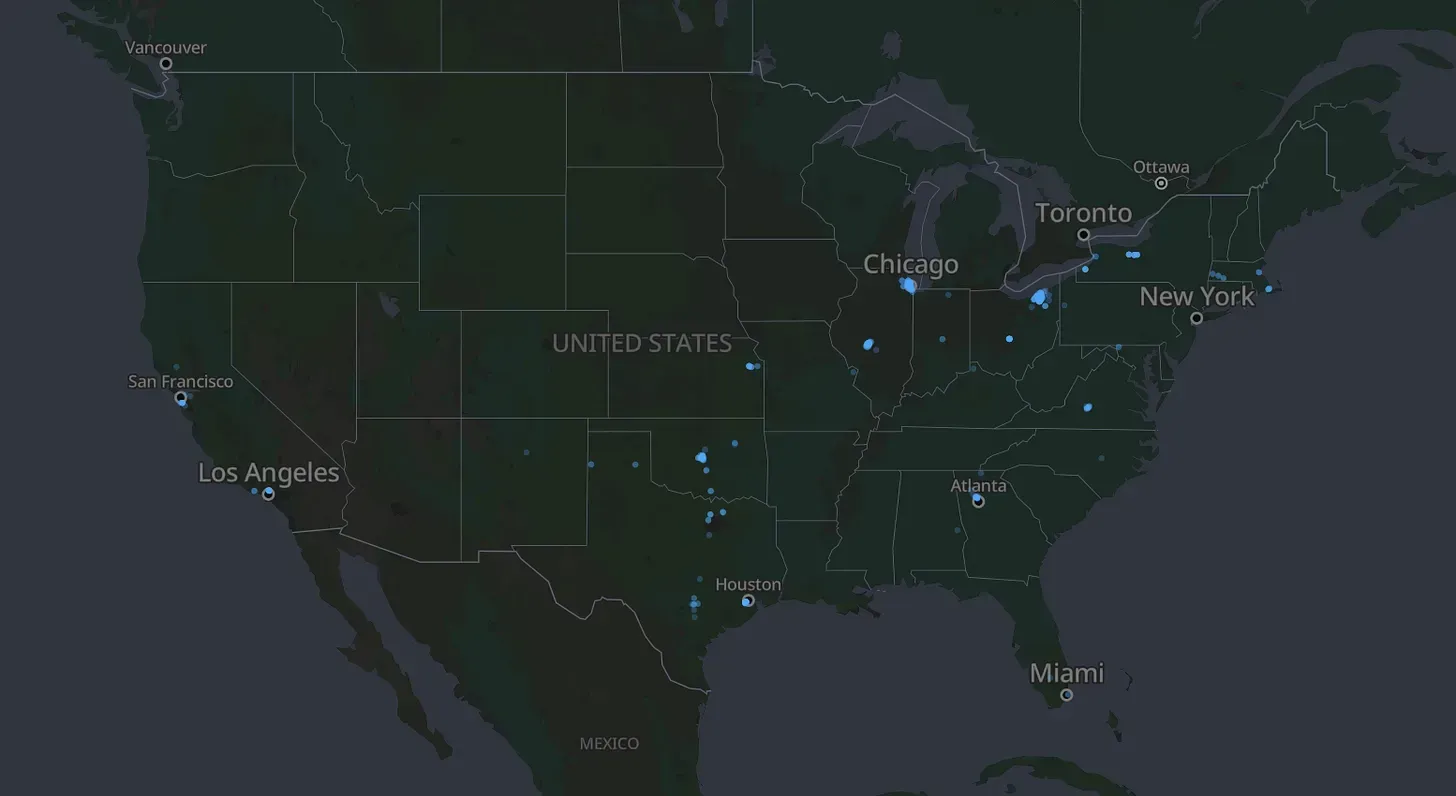
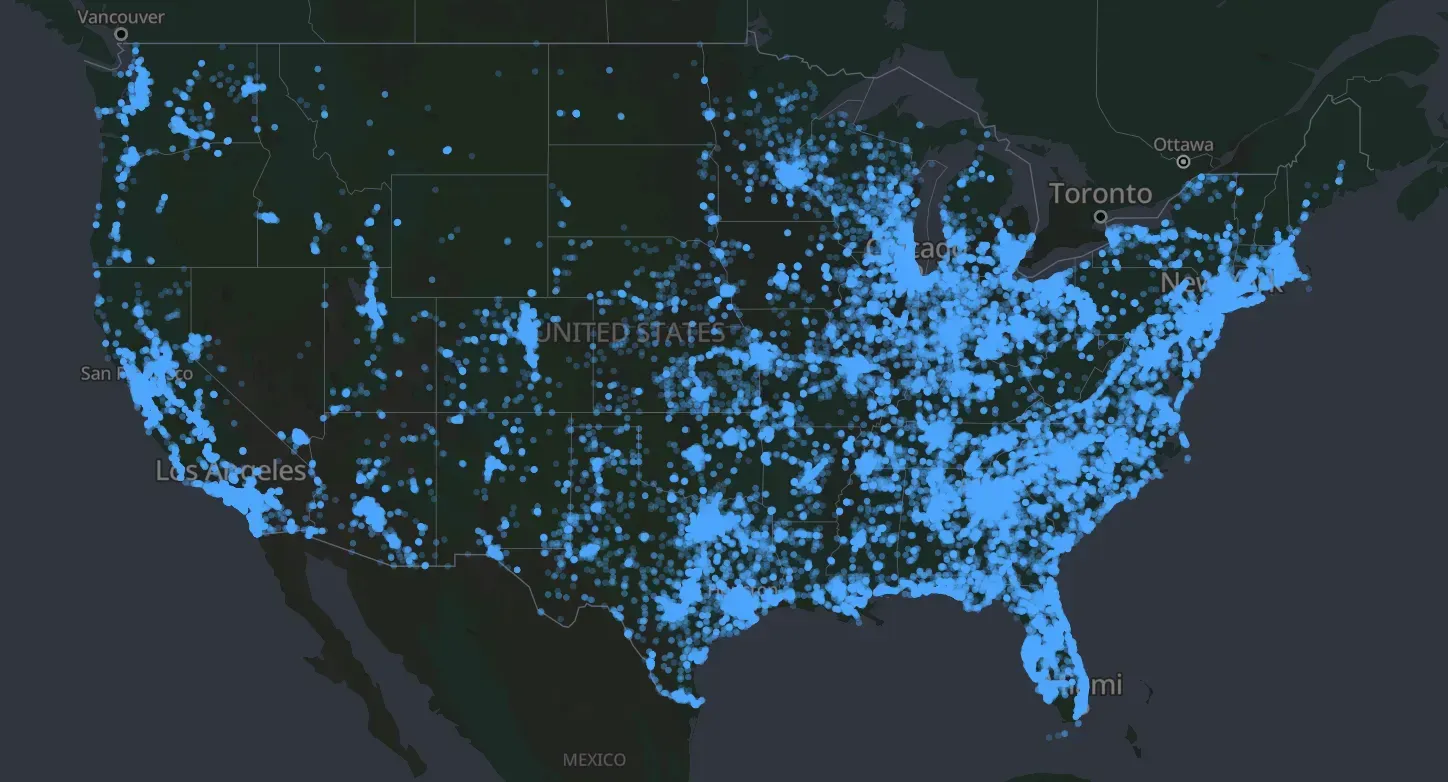
The DeFlock map from September 2024 shows relatively limited coverage. Cameras were scattered and heavily concentrated around a few major cities. The second image shows the far denser network across the US, as of September 2026. Whatever your opinion of the technology, the speed of that expansion is worth paying attention to.
But this is where the current discussion becomes too narrow. If we are going to have a serious conversation about government surveillance, that conversation cannot begin and end with Flock cameras.
In 2017, WikiLeaks began publishing what became known as Vault 7, a massive collection of classified CIA documents describing cyber capabilities developed for intelligence operations. The materials dealt with tools capable of compromising computers, phones, routers, televisions, and other devices for purposes that included location collection, credential theft, audio collection, and data extraction. The Justice Department later described the underlying theft as the largest data breach in CIA history.
That matters because Vault 7 demonstrated just how far modern surveillance technology can reach. The public debate over surveillance often focuses on the technology we can physically see. A camera mounted on a pole is obvious. Software running on a compromised computer, router, or television is not.
Among the tools disclosed through Vault 7 were:
- Weeping Angel: Turned certain Samsung smart televisions into audio collection devices using their built-in microphones.
- ELSA: Tracked the physical location of Windows laptops by recording nearby Wi-Fi access points and using that information to determine location.
- Cherry Blossom: Targeted Wi-Fi routers and access points, allowing network activity to be monitored and facilitating additional collection.
- Scribbles: Embedded tracking in documents to monitor when and where those documents were opened.
- AfterMidnight: Malware capable of surveying compromised computers.
- HighRise: Used SMS messaging to relay information between compromised devices and CIA infrastructure.
- Hive: Provided command-and-control infrastructure for communicating with implants and receiving information collected from compromised systems.
Vault 7 is one side of the surveillance story. The other side is not technological at all. It is legal. Following the terrorist attacks of September 11, 2001, Congress passed the USA PATRIOT Act as part of the effort to give the government greater ability to identify, investigate, and stop terrorist threats. Whatever anyone thinks of the intentions behind the law, its effect was a significant expansion of federal surveillance authorities.
Section 215 became one of its most controversial provisions. It allowed the government to seek orders from the Foreign Intelligence Surveillance Court (FISA) for business records and other data relevant to national security investigations. The authority did not use the ordinary criminal ‘probable cause’ standard, only that it is relevant to a national security investigation. Section 215 and FISA later became associated with the NSA’s bulk phone record data collection program. Congress ended that form of bulk collection through the USA FREEDOM Act in 2015, and Section 215 itself ultimately expired in March 2020 and has not been reauthorized.
The PATRIOT Act also addressed delayed notice searches under Section 213, expanded ‘pen register’ (IP and phone record data collection) and ‘trap and trace’ authorities (IP and phone record data collection) under Section 214, changed the relationship between foreign-intelligence and criminal investigations through Section 218 (lowered the legal standard for obtaining surveillance and physical search orders), and expanded National Security Letter authorities (subpoenas used by the U.S. government to compel private entities, such as banks, phone companies, and internet service providers, to hand over customer records without needing court approval) through Section 505.
This is where the discussion becomes uncomfortable, because there is a balance that has to be confronted. The government has a legitimate responsibility to protect the American public. Terrorist organizations exist. Foreign intelligence operations exist. Organized crime exists. There are circumstances where surveillance is necessary to investigate crimes and prevent attacks.
But national security cannot simply become a phrase that ends the conversation.
The Constitution places limits on government power precisely because there will always be compelling reasons offered for why that power should be expanded.
The Constitution and Privacy
The Fourth Amendment says:
“The right of the people to be secure in their persons, houses, papers, and effects, against unreasonable searches and seizures, shall not be violated, and no Warrants shall issue, but upon probable cause...”
The Ninth Amendment reminds us that the enumeration of certain rights in the Constitution should not be interpreted to deny other rights retained by the people.
And the Fourteenth Amendment provides that no state may deprive a person of life, liberty, or property without due process of law.
This brings us back to Flock.
Does a police department violate the Constitution every time a Flock camera photographs a license plate on a public road? No, and that is probably the wrong way to frame the question.
A license plate is displayed publicly, and a single camera observing a vehicle traveling on a public road is very different from the government entering someone’s home or searching their private belongings. The harder constitutional question arises when thousands or millions of otherwise public observations are collected, stored, searched, and combined into a detailed history of someone’s movements. That distinction gets to the point of this entire discussion.
The question should not simply be, can the government use this technology? They can.
The more important question is, how much surveillance power should we be comfortable giving the government?
That question applies to Flock cameras. It applies to the intelligence capabilities exposed through Vault 7. It applies to the surveillance authorities created or expanded after September 11. It applies to technologies that exist today, and it will apply to technologies that have not even been developed yet.
It is easy to oppose surveillance when the surveillance device is physically sitting on a pole at the end of your street. It is much harder to maintain the same level of concern when the surveillance is hidden inside statutes, databases, intelligence programs, dense national security laws, software exploits, or systems no one will ever see firsthand.
That is why the conversation about Flock and mass surveillance should be larger than just Flock.
If your objection is that the government should not be able to build a searchable record of where ordinary Americans travel without a warrant, then that principle should not stop with license plate readers. If you believe public safety justifies those tools when appropriate safeguards and oversight exist, then that principle should be applied consistently when evaluating all other government surveillance programs.
You do not have to arrive at one particular answer. But whatever answer you arrive at should survive being applied beyond the technology that happens to be in the news this week, or found at the end of your street.
The debate is not really about cameras; it is about where we draw the line between security and liberty, and who gets to draw that line.
Ryan Parada is a Senior Partner at Connector, Inc., where he oversees both domestic and international portfolios. He advises clients on a range of policy issues, including national security, critical infrastructure, and the tobacco industry. His writing focuses primarily on radicalization, terrorism, and national security.