
Ryan Reynolds Pissed Off The Wrong Generation
The generation with the wallets and the ballots doesn't forget an insult.
Ryan Reynolds knows how much a reputation is worth, perhaps better than almost any actor working today. He didn’t simply become a movie star. He turned likability, humor and an unusually effective personal brand into a business model. Reynolds helped market Deadpool, invested in Aviation Gin, became an owner of Mint Mobile, built Maximum Effort and helped transform a once-obscure Welsh soccer club into an international entertainment property. His public persona isn’t merely part of his celebrity; it has become an extraordinarily valuable commercial asset.
So it was particularly strange to hear one of Hollywood’s most accomplished marketers dismiss the decade most closely associated with Generation X as a “brutal, brutal time” and “a fucking mess.” Reynolds made the remarks while promoting Mayday, ironically a movie set in 1987 and steeped in the very 1980s nostalgia he was criticizing. His broader point—that nostalgia can sanitize the unpleasant parts of history—is hardly indefensible. The 1980s had recessions, AIDS, the Cold War, crime, deindustrialization and plenty of genuine hardship. But there is an important difference between acknowledging the problems of an era and appearing to ridicule people’s affection for the period in which they grew up.
The business lesson is pretty simple: Don’t gratuitously insult your customers’ memories, especially when those customers have a tremendous amount of money—and a tremendous number of votes.
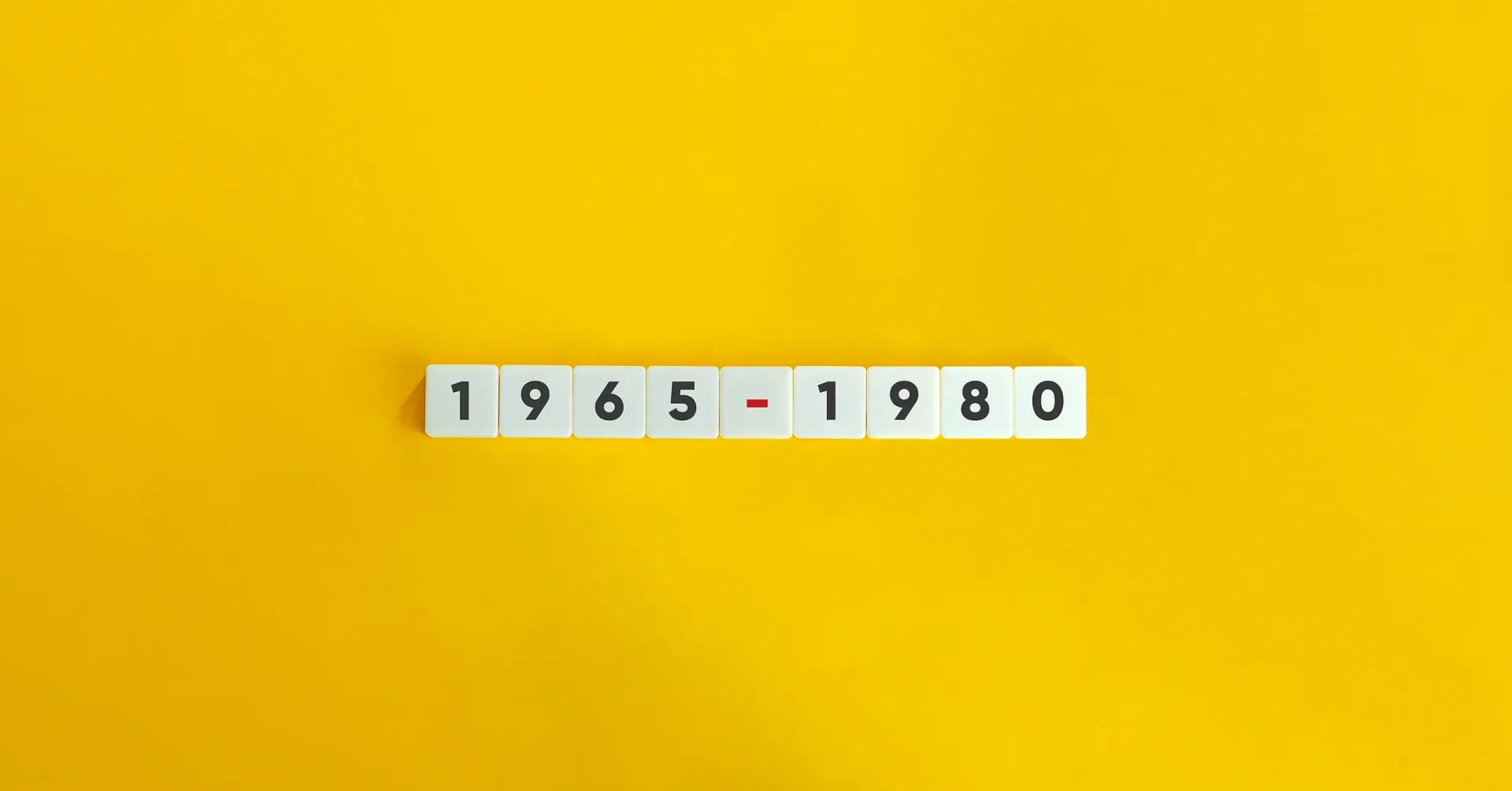
Generation X, generally defined as Americans born between 1965 and 1980, has spent decades being treated as America’s demographic middle child. Marketers obsessed first over Baby Boomers, then Millennials and now Gen Z. Political strategists have often done much the same thing, focusing on dependable older voters or whatever younger demographic is supposedly about to remake American politics. Meanwhile, Gen X quietly acquired the mortgages, retirement accounts, management jobs, businesses, purchasing authority and political influence.
The numbers should get the attention of corporate America. According to research from NielsenIQ and World Data Lab, Gen X accounted for an estimated $15.2 trillion in global consumer spending in 2025 and is expected to remain the world’s highest-spending generation through 2033. In the United States, Gen X represents roughly one-fifth of the population but accounts for an outsized share of household spending. These aren’t twenty-somethings corporations hope will someday become valuable customers. They are consumers making some of the largest financial decisions of their lives right now.
Consider what makes today’s Gen X consumer particularly valuable:
- They are in or near their peak earning years.
- They are buying homes, vehicles, insurance, financial services, travel, entertainment and healthcare.
- Many are simultaneously spending money on children and aging parents.
- They occupy a disproportionate number of management, ownership and household decision-making roles.
- They have decades of potential consumer life remaining.
That’s not a nostalgia market. That’s an economy.
But corporate purchasing power is only half of the equation. Gen X is also an unusually interesting political constituency because it does not fit comfortably into either party’s coalition. Pew Research Center’s analysis of partisan identification found voters in their 40s and 50s closely divided between Republicans and Democrats. Among Americans born in the 1970s—the heart of Generation X—the partisan division was essentially even. Republicans cannot take these voters for granted, Democrats cannot take them for granted, and neither party can afford to dismiss them culturally.
That combination makes Gen X something increasingly valuable in American politics: a large, mature and politically competitive segment of the electorate with substantial economic power. Younger generations may attract more attention because their political attitudes appear to point toward America’s future, but elections are decided by people who actually show up. Gen X is old enough to have developed regular voting habits, young enough to remain electorally relevant for decades and divided enough that persuading even a relatively small percentage can matter.
There is another factor that marketers and political strategists haven’t fully incorporated: longevity. The oldest members of Generation X are only entering their early 60s, while the youngest are still in their 40s. Advances in cardiovascular care, cancer treatment, pharmaceuticals, diagnostics and chronic-disease management mean millions of Gen X Americans can reasonably expect to remain economically and politically active much longer than comparable generations did historically. The person who was 18 years old watching the Berlin Wall come down in 1989 is only in his or her mid-50s today. That voter could plausibly participate in another eight, ten or more presidential elections.
That doesn’t necessarily make Gen X the largest generation America will ever see, and claiming that would invite a demographic argument that distracts from the larger point. What may make Gen X historically unusual is the duration of its influence. America has never had a society this wealthy, this medically advanced and this capable of keeping tens of millions of people economically engaged well beyond traditional middle age. Gen X could therefore occupy the intersection of substantial wealth, high political participation and meaningful longevity for a remarkably long time.
Which brings us back to Ryan Reynolds.
Reynolds’ business career increasingly depends upon something far more valuable than box-office receipts: the transfer of his personal reputation onto consumer brands. When Ryan Reynolds tells consumers Mint Mobile is clever, inexpensive and different, the product borrows some of Ryan Reynolds’ credibility. When he promotes Aviation Gin, the gin borrows from Reynolds. When audiences watch Welcome to Wrexham, the soccer club benefits from the same relationship. Maximum Effort effectively industrialized the connection between Reynolds’ personality, humor and commerce.
That is brilliant marketing, but brand equity works in both directions. If consumers can transfer affection for a celebrity onto a product, they can also transfer irritation with that celebrity onto the same product. That is why public relations has economic value even though accountants can’t put “people still like our spokesman” neatly onto a balance sheet. Reputation is an intangible asset until something damages it; then executives suddenly discover how tangible it can become.
Reynolds should understand this better than most. T-Mobile’s agreement to acquire Mint Mobile’s parent company carried a potential value of as much as $1.35 billion. Diageo’s acquisition involving Aviation Gin and other brands carried potential consideration of up to $610 million. Those transactions weren’t worth that much simply because Ryan Reynolds told funny jokes in commercials, but his marketing ability—and his unusual capacity to make consumers feel as though they were participating in the joke rather than being sold something—was undeniably part of the machinery that helped build those brands.
So what is the financial value of not irritating Generation X? Nobody can responsibly calculate what Reynolds’ comments cost him personally. Perhaps nothing measurable. Maybe the controversy disappears almost immediately. But when a consumer cohort controls trillions of dollars in annual spending, even microscopic movements in consumer sentiment can represent enormous economic activity. If your business model depends upon personal goodwill, unnecessarily creating friction with that audience is the corporate equivalent of setting fire to a few dollars just to see if anyone notices.
The mistake is particularly unnecessary because Gen X doesn’t need Reynolds, Hollywood, corporations or politicians to tell us the 1980s were perfect. We were there. We remember Challenger exploding, AIDS, nuclear-war anxiety and missing children appearing on milk cartons. We also remember riding bicycles until the streetlights came on, MTV actually playing music videos and a cultural explosion that gave us Prince, Van Halen, Run-DMC and Springsteen. We remember Top Gun, The Breakfast Club, Raiders of the Lost Ark and Back to the Future. We remember the Miracle on Ice at the beginning of the decade and the Berlin Wall coming down at the end.
It wasn’t paradise. It was our childhood. There is a difference.
That distinction matters to marketers, but it should matter equally to politicians. People don’t experience politics as spreadsheets of demographic attributes. They bring memories, grievances, aspirations and cultural identities into the voting booth with them. Tell an entire generation often enough that the country they remember fondly was backward, embarrassing or morally deficient, and eventually some of them may begin wondering why they should continue supporting the institutions, corporations and political movements doing the lecturing.
This is where the economic and political stories converge. The same 55-year-old choosing a wireless carrier on Saturday may be choosing a president, senator or governor on Tuesday. The consumer and the voter aren’t separate people. Corporate America understands sophisticated demographic targeting when it wants to sell SUVs, financial services, prescription drugs or streaming subscriptions, while political America spends billions attempting essentially the same exercise every election cycle. Yet both have become hypnotized by younger generations because younger generations generate cultural attention.
Attention and influence, however, aren’t the same thing. Gen X has money. Gen X votes. Gen X owns homes and businesses, manages companies, raises children and increasingly cares for aging parents. Most importantly for politicians, much of Gen X remains persuadable. Most importantly for businesses, Gen X has substantial purchasing power and potentially decades left to exercise it.
Ryan Reynolds has accumulated an enormous reservoir of public goodwill, and one ill-considered comment isn’t going to bankrupt him. But it was an unnecessary withdrawal from an account that has helped make him extraordinarily wealthy. Other celebrities, corporate executives and politicians would be wise to notice the larger lesson.
Gen Z may dominate TikTok. Millennials may dominate marketing presentations. Boomers may still dominate many institutions. But Generation X occupies something potentially more valuable: the intersection of the cash register and the ballot box.
Ignoring them is bad marketing. Insulting them may be bad politics, too.
Chris Faulkner, a United States Marine Corps veteran (1991–2001), serves as a Senior Advisor at Connector, Inc. where he leans on nearly three decades of winning campaigns to advise our clients on their political efforts and goals. He and his wife, Angela, live outside Knoxville, Tennessee with their poodle and pit bull, and are proud parents of three adult sons.