
The Reliability Premium: Why the Energy Market Is Being Paid to Stand By
The next energy premium won't go to the cheapest electron — it'll go to the most reliable one.
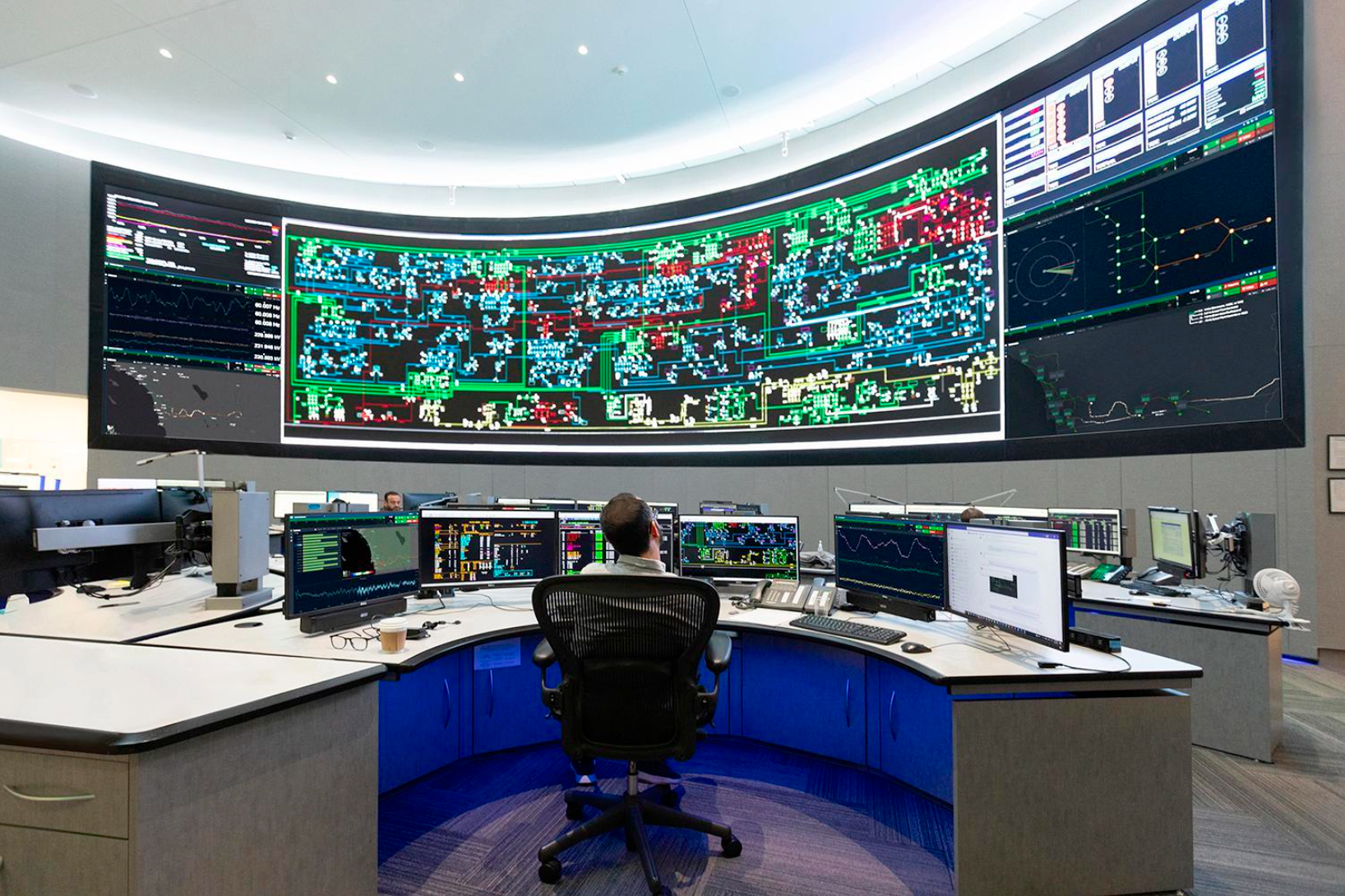
For most of the past three decades, electricity markets rewarded one thing above all else: the lowest-cost electron.
Competition, deregulation, and technological innovation drove remarkable improvements in efficiency. Utilities optimized generating portfolios, older power plants were retired, and investors increasingly assumed that if electricity could be produced cheaply, it would also be available whenever society needed it.
That assumption is quietly disappearing.
A fundamental transformation is underway across global energy markets. Increasingly, utilities, investors, governments, and large industrial consumers are discovering that the true value of electricity is no longer determined solely by how inexpensively it can be generated, but by the certainty with which it can be delivered.
We are entering an era of Reliability Economics, where dependable electricity is becoming one of the most valuable commodities in the global economy. For the last thirty years, we optimized the cost of electricity. The next thirty years will optimize the certainty of electricity.
Across the United States and much of the developed world, electricity markets are beginning to place a measurable value on reliability itself. Utilities are paying to keep generating capacity available. Grid operators are expanding capacity markets. Large industrial consumers are entering long-term agreements to secure dependable power. Investors are beginning to recognize that availability carries economic value independent of energy production.
Reliability is no longer simply an engineering objective.
It is becoming an investable asset.
This represents one of the most significant structural changes in energy markets in decades, yet it has received surprisingly little public attention. Headlines continue to focus on oil prices, OPEC production decisions, LNG exports, renewable deployment, or battery manufacturing. The more consequential story is unfolding inside electricity markets themselves.
The market is beginning to price certainty.
The reasons are becoming increasingly apparent.
Electricity demand is accelerating for the first time in a generation. Artificial intelligence, hyperscale data centers, semiconductor manufacturing, electrification, advanced industrial facilities, and domestic reindustrialization are placing unprecedented demands on electric grids. Unlike previous periods of demand growth, much of today's new load requires uninterrupted, high-quality electricity twenty-four hours a day. Even a brief interruption can cost millions of dollars or disrupt critical operations.
Recent events in Northern Virginia provide a compelling illustration of how quickly this new reality is emerging. Following a transmission equipment failure serving one of the world's largest concentrations of hyperscale data centers, several facilities automatically transferred to backup generation. In a matter of seconds, approximately three gigawatts of electrical demand—roughly equivalent to the output of several large power stations—disappeared from the PJM Interconnection. The resulting voltage disturbance caused lights to flicker across much of the Eastern U.S. before grid operators stabilized the system. The grid ultimately performed as designed, but the event demonstrated how concentrated, high-speed electrical loads can influence system behavior far beyond the location where the disturbance originated.
For decades, power system planning focused primarily on generation. Utilities studied how power plants responded to disturbances while treating demand as relatively predictable and gradual. That assumption is beginning to change. Hyperscale data centers, artificial intelligence campuses, semiconductor fabrication plants, and other large industrial facilities represent electrical loads measured not in megawatts, but increasingly in gigawatts. These facilities are no longer passive consumers of electricity. Their operating characteristics increasingly influence grid stability alongside the generators that supply them.
This represents a fundamental shift in how electricity systems must be planned and operated. The traditional grid was designed around the assumption that demand changes gradually while generation responds dynamically. Artificial intelligence infrastructure is beginning to reverse that relationship. Utilities will increasingly need to manage large electrical loads with the same sophistication once reserved exclusively for power plants. The future grid will not simply balance supply and demand—it will actively coordinate both. Reliability will increasingly depend on how intelligently generation, transmission, storage, and demand respond together during periods of system stress.
At the same time, maintaining grid reliability is becoming more complex from both the supply and demand sides of the electricity system. While increasingly concentrated electrical loads introduce new operational challenges, many power systems have also become more dependent upon resources whose output varies with weather conditions. Wind and solar have become indispensable parts of the generation portfolio, but they have not eliminated the need for dispatchable resources capable of responding immediately when renewable output declines or demand unexpectedly increases.
The result is a growing recognition that capacity matters just as much as energy production.
Grid operators are responding accordingly. Capacity auctions in several regional markets have reached record levels as utilities compete to secure dispatchable resources before reserve margins tighten further. Nuclear facilities once scheduled for retirement are receiving life extensions. Natural gas plants expected to close are remaining online. Utilities continue investing in battery storage, demand response programs, transmission expansion, and reserve generation—not necessarily because these assets produce the least expensive electricity, but because they increase confidence that electricity will be available whenever it is needed.
In other words, markets are beginning to reward availability.
Historically, electricity was valued primarily as a commodity measured in megawatt-hours. Increasingly, however, markets are assigning value to certainty itself. The ability to deliver electricity during periods of system stress is becoming just as economically important as the ability to generate it.
That distinction changes how virtually every energy technology is evaluated.
Natural gas remains indispensable because of its operational flexibility and ability to provide reliable baseload and peaking power. Existing nuclear plants have become increasingly valuable because they deliver carbon-free electricity around the clock while strengthening grid resilience. Hydroelectric facilities continue providing essential dispatchability and ancillary services. Battery storage is increasingly compensated not only for shifting energy but also for supporting frequency regulation, voltage stability, and grid reliability.
Looking further ahead, the Reliability Premium may prove to be one of the strongest market forces accelerating the next generation of advanced nuclear technologies. Small modular reactors (SMRs), high-temperature gas reactors, and molten salt reactor (MSR) designs are attracting growing attention not simply because they offer low-carbon electricity, but because they promise continuous, dispatchable power with operating lives measured in decades and relatively stable fuel costs.
Several governments and private developers are advancing these technologies toward commercial deployment. While many remain in various stages of demonstration and licensing, progress over the past several years suggests that advanced reactor designs are steadily moving from research laboratories toward commercial reality. Whether every design ultimately succeeds remains uncertain. What is becoming increasingly clear, however, is that markets are beginning to reward technologies capable of delivering dependable electricity every hour of every day—not simply the lowest-cost electricity when conditions are favorable.
Even transmission infrastructure—often overlooked in public debate—is being revalued as the essential connective tissue that allows diverse generation resources to support one another across regions. Long-distance transmission, advanced grid controls, and digital monitoring systems are becoming as strategically important as the generating assets themselves.
For investors, the implications are equally significant.
Traditional valuation metrics focused primarily on energy production may no longer capture the full value of generating assets. Capacity revenues, ancillary service markets, reserve margins, transmission investments, long-duration reliability contracts, and grid resilience are becoming increasingly important indicators of long-term value creation.
The companies capable of reliably delivering electricity—not merely generating it—are likely to command an increasing competitive advantage.
The implications extend well beyond electric utilities.
Consumers will also increasingly encounter the Reliability Premium, although it may not always appear as a separate line item on their monthly electric bill. Investments in reserve generation, transmission upgrades, battery storage, advanced grid controls, cybersecurity, and system resilience all carry costs that utilities must recover over time. As electricity systems become more complex and society becomes more dependent on uninterrupted power, maintaining reliability will require sustained investment across the entire grid.
Reliable electricity is rapidly becoming a strategic economic advantage. Artificial intelligence, semiconductor manufacturing, advanced industrial production, hydrogen development, and critical mineral processing all depend upon abundant, uninterrupted electricity. Increasingly, the question facing investors is not simply where labor is cheapest or taxes are lowest, but where electricity can be trusted.
Countries capable of providing dependable, affordable electricity at scale will enjoy significant advantages in attracting investment, supporting innovation, strengthening national security, and expanding economic growth. Reliable electricity is becoming an instrument of economic competitiveness.
This reality should influence decisions regarding permitting reform, transmission expansion, advanced nuclear deployment, natural gas infrastructure, long-duration energy storage, grid modernization, and continued investment in dispatchable generation. It also reinforces the importance of maintaining a diversified generation portfolio rather than becoming overly dependent upon any single technology or fuel source.
The energy transition is not eliminating reliability risk.
It is changing where that risk resides.
The challenge for policymakers is no longer choosing between conventional and emerging technologies. It is designing energy systems capable of delivering resilient, affordable, and increasingly clean electricity under a wider range of operating conditions.
For years, public debate has focused primarily on the cost of electricity.
The next decade will increasingly focus on its certainty.
Markets are already recognizing this transformation, even if much of the public discussion has not. Utilities, investors, technology companies, and policymakers are beginning to understand that resilience carries measurable economic value. The premium once attached almost exclusively to low-cost generation is gradually shifting toward assets capable of delivering dependable service under increasingly complex operating conditions.
The next generation of energy leaders will not be defined simply by who produces the cheapest electricity. They will be defined by who consistently delivers abundant, reliable, resilient, and increasingly clean electricity when society depends upon it most.
Whether that electricity comes from advanced natural gas, existing nuclear facilities, next-generation reactors, hydroelectric power, long-duration storage, geothermal resources, or technologies still under development is ultimately less important than the outcome they achieve.
The global economy is entering an era in which reliability itself is becoming one of the world's most valuable energy commodities.
The next decade will not simply reward the lowest-cost electrons.
It will reward those who can guarantee they arrive.
Rick Westerdale has more than 30 years of experience across the federal government as well as in the global energy industry. As a Vice President at Connector, Inc., a boutique government relations and political affairs firm based in Washington, D.C., Rick advises clients on strategy, investment, and policy across healthcare, hydrocarbons, LNG, hydrogen, nuclear, and the broader energy transition.