
Venezuela, Power, and the Drug Kingpin Question
Ryan Parada • January 7, 2026
Make no mistake of it, the language being used about Nicolás Maduro is purposeful.
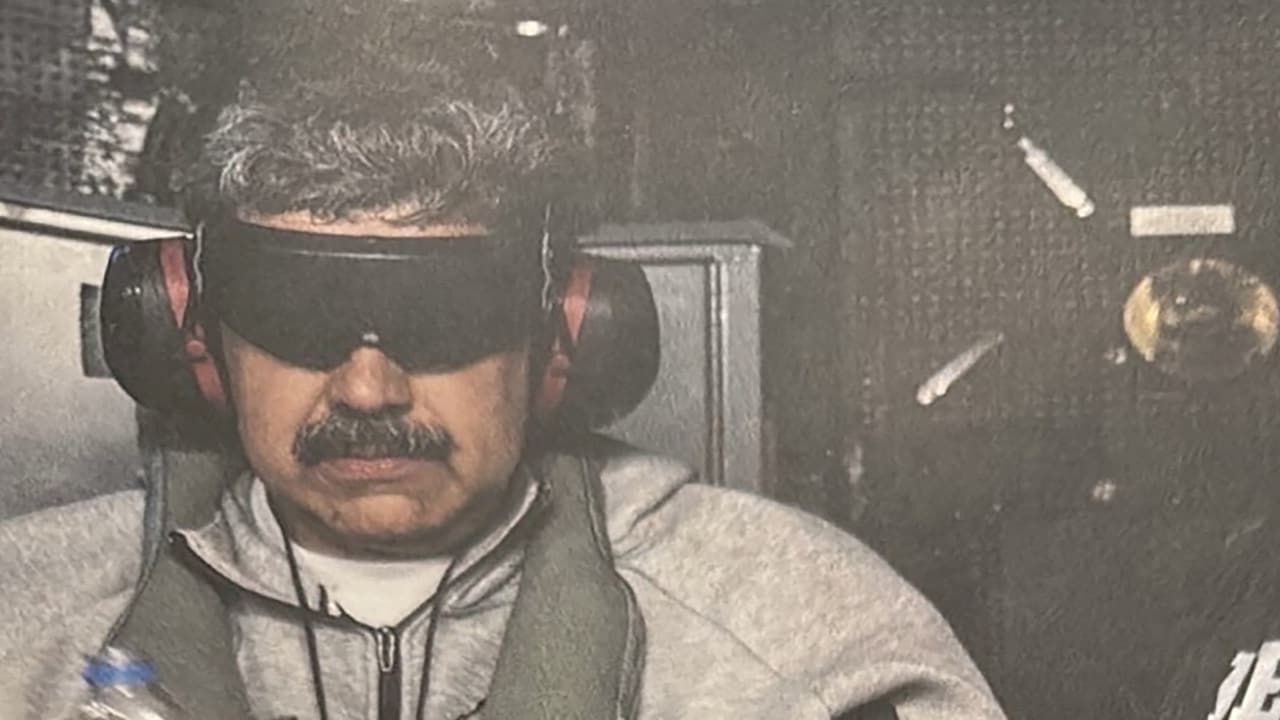
This piece is a continuation of our earlier posts on Venezuela and President Donald J. Trump’s approach to dealing with the Maduro regime. If you’ve read those pieces, consider this the next chapter. Let’s step away from abstract debates and speak plainly about power, consequences, and what it actually looks like when the United States decides to use the military capability it spends an enormous amount of money to maintain.
One phrase the keeps coming up in conversations about Venezuela is “drug kingpin.” It is often thrown around casually, but under U.S. law it carries real weight. In the federal system, capital punishment is extremely rare and tightly limited. The United States government can only seek the death penalty for a narrow set of crimes: certain forms of first-degree murder under federal jurisdiction, treason against the United States of America, and specific high-level drug trafficking offenses ties to massive criminal enterprises.
That last category is the one most people misunderstand. These are not street dealers or even mid-level traffickers. The law targets the leaders of sprawling drug empires that operate across borders, command violence as a tool, and destabilize entire regions. Congress made a conscious decision decades ago that these figures pose a threat on the same level as enemy combatants. When killings, command responsibility, and large-scale conspiracy are involved, the federal government treats them as something closer to hostile actors than ordinary criminals.
This is why President Trump’s choice of words matter. When he referred to Nicolás Maduro using the term “drug kingpin” following the operation in Venezuela, he was not just insulting him or using tough language for political effect. He was signaling a specific legal and moral framing. The implication is simple: if a regime leader is effectively running a transnational criminal organization, then the usual protections of sovereignty start to look a lot thinner.
The operation itself marked a shift in how warfare is conduted and how power is applied. For years, American military strength has existed in a strange limbo. We either overcommitted with long occupations or limited ourselves to distant strikes that solved little. What happened in Venezuela showed a different model. Go in, accomplish the mission, and leave. Very similar to what we saw a few months ago in Iran against their nuclear assets. There was no attempt to occupy territory or reshape a country. There was no open-ended deployment. The United States used the most capable military on earth exactly as it was designed to be used. Elite forces, precise intelligence, overwhelming control of the air, and clear objectives.
The most important part of this story is also the simplest. No American service members were killed. That is truly extraordinary. This was a mission that went deep into hostile territory that apparently had air defenses and troops publicly showing shoulder-fired anti-air weapons in propaganda videos. Yet no U.S. aircraft were lost. No helicopters went down. No pilots or operators were killed or captured.
That outcome is not an accident. It is the results of training standards that are brutally selective, planning that is months long, and exhaustive, and a military culture focused on mission success with minimal loss of life. American taxpayers spend roughly one trillion dollars a year on defense — a number that critics often frame as wasteful. This is what that investment looks like when it is actually used properly.
What has been rare is not the capability, but the willingness to use it. President Trump demonstrated that he is willing to deploy American power decisively, narrowly, and without apology. The message sent by this operation goes far beyond Venezuela. Leaders of cartels, terror networks, pirates, militias, and criminal syndicates around the world now have to think very carefully about their assumptions, and where the “line” actually is.
For a long time, many of these groups operated under the belief that the United States would hesitate, debate itself into paralysis, or confine its response to sanctions and statement. That assumption is now far less safe. When the United States shows that it can reach out, eliminate a problem, and disengage without losing lives, deterrence suddenly becomes very real again.
This brings us to international law. There has been a lot of fiction surrounding this topic in the mainstream media since the successful operation. In practice, international law only matters when powerful countries agree that it matters. There is no real global police force . . . there is no international court that can compel a superpower to comply against its will.
The United States does not submit itself to international criminal courts in the way other states do, and it never will. This is not because of arrogance for its own sake, but because power creates its own rules. A country with the largest economy in the world, the most capable military ever assembled, and economic influence in nearly every nation on Earth does not answer to abstract legal bodies that it did not empower.
When a dominant power decides that a situation has crossed a line, it acts. Treaties, resolutions, and norms exist only as long as the hegemon finds them useful. When they stop being useful, they stop being relevant. This is uncomfortable to admit, but it is how the world actually works.
On the domestic political side of things, predictably, Democrats and their allies in the media have responded to the Venezuela operation with hyperbole, alarmism, and a performative sense of moral panic. Words like “escalation,” “recklessness,” and “international crisis” are being thrown around with abandon, not because they are accurate but because they are politically useful.
This is the same reflex we have seen time and again. When President Trump applies American power with clarity and restraint, Democrats respond as though the sky is falling. They did it after the strike on Soleimani. They did it after decisive action against ISIS, and turning Iran’s nuclear apparatus to rubble. And now they are doing it again, insisting that strength itself is destabilizing, while weakness somehow preserves peace.
What Democrats refuse to acknowledge is that this operation was neither impulsive nor indiscriminate. It was narrow, intentional, legally grounded, and successful. No prolonged deployment. No occupation. No American casualties. No drift into nation-building or endless conflict.
Democrats are not reacting to what actually happened. They are reacting to the fact that it worked, and that it exposes how hollow their own approach to foreign policy has become.
Deterrence was the point . . . and it always was.
One of the most important takeaways from Venezuela has little to do with Venezuela itself. It is the reassertion of real deterrence. In Rob Burgess’ most recent piece on the Trump Doctrine, deterrence is not built through speeches, summits, or symbolic resolutions. It is built when adversaries understand — clearly and unmistakably — that crossing certain lines carries immediate and unavoidable consequences. President Trump’s approach has always been straightforward: define the line, communicate it plainly, and enforce it decisively. Venezuela now stands as a case study in what that doctrine looks like in practice.
This wasn’t about regime change. It wasn’t about occupation. It was about demonstrating that when a so-called “leader” operates as the head of a criminal enterprise, particularly one tied to narcotics trafficking and regional destabilization, they do not enjoy infinite insulation under the guise of sovereignty. That message didn’t just land in Caracas. It landed in cartel safe havens, terror finance hubs, and capital cities where leaders have grown far too comfortable assuming American restraint is permanent.
Venezuela now stands at a decisive crossroads. There is a clear path toward rebuilding legitimacy, reintegration into the international system, and serving its people, but it requires abandoning criminal-state behavior and accepting that the United States will not tolerate regimes that operate as hostile syndicates. Continued defiance leads only to deeper isolation, sustained pressure, and (when necessary) decisive action. A future without U.S. involvement is not realistic, a reality President Trump has made unmistakably clear. The remaining leadership must determine whether Venezuela will leverage its vast natural resources, capable population, and geographic advantages to rebuild and stabilize the nation, or continue making choices that push it further into a corner.
Ryan Parada is a Partner and the Chief Government Affairs Officer for Connector, Inc. where he oversees both domestic and international portfolios. He is a policy expert for our clients in numerous areas, including national security, energy, and the tobacco industry.
Rob Burgess is a national Republican strategist, and Chief Executive Officer at Connector, Inc. – a boutique government relations and political affairs firm with offices in Washington, D.C.