
Venezuela's Oil Moment: Leverage Without Illusions
Rick Westerdale • January 5, 2026
What the mainstream media's headlines missed
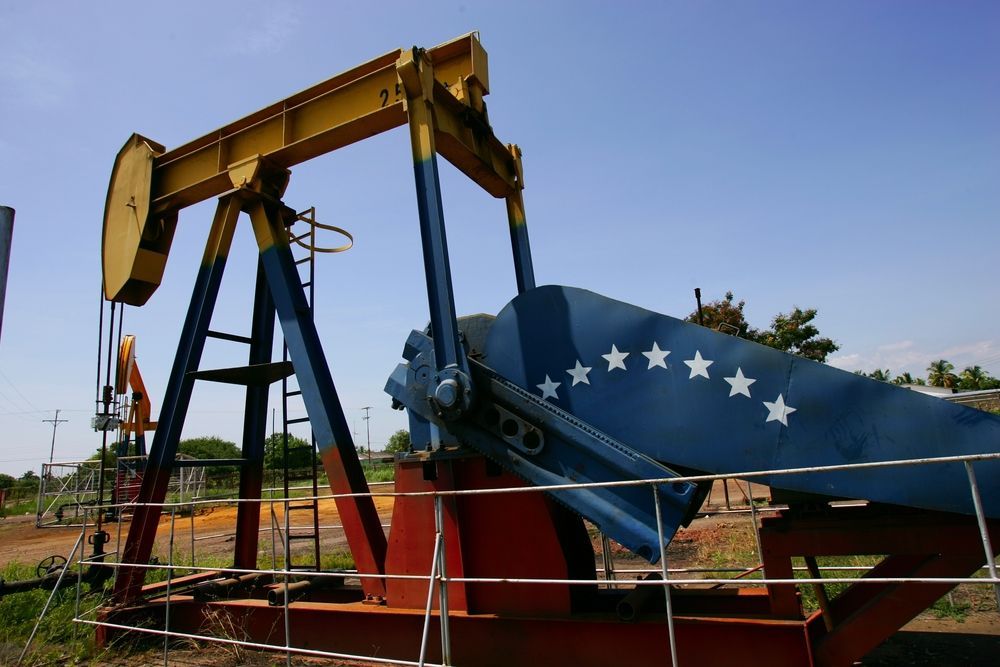
For much of the twentieth century, Venezuela was a pillar of the global oil system. By the late 1970s, it was producing more than 3.5 million barrels per day, supplying a meaningful share of global markets and serving as one of the United States’ most important crude suppliers. It was a founding member of OPEC, a reliable exporter, and home to what would eventually be recognized as the largest proven oil reserves on the planet.
That Venezuela exists today only in memory.
Years of political mismanagement, corruption, and ideological hostility to private capital hollowed out the country’s oil sector long before U.S. sanctions were imposed. The Chávez–Maduro era replaced technical competence with political loyalty, drove out experienced operators, underinvested in infrastructure, and transformed PDVSA from a functioning national oil company into a patronage machine. Production collapsed from over two million barrels per day in the early 2010s to well under one million by the end of the decade.
U.S. sanctions accelerated — but did not cause — that collapse. Beginning in 2019, Washington cut off Venezuela’s access to U.S. markets, finance, and diluent supplies, effectively freezing exports to the Gulf Coast and forcing Caracas into discounted, opaque sales primarily to China. By 2020, Venezuelan output had fallen below 500,000 barrels per day. Even as global demand rebounded after COVID, Venezuela remained sidelined — its oil stranded by politics, decay, and isolation.
With Nicolás Maduro now removed from power, Venezuela’s oil has returned to the center of global energy and geopolitical calculations. The United States suddenly has leverage it has not possessed in a generation. The challenge is using that leverage wisely — without mistaking headlines for reality or oil potential for oil capacity.
What the Headlines Miss: 12 Constraints on “Easy Venezuelan Barrels”
Everyone’s talking about politics.
The real gating factors are operational, legal, and financial — and they don’t fix themselves when the headline changes.
1. Who controls the gates, not the ministries
Field access can be dictated by local power brokers, security units, unions, and informal networks — not Caracas press conferences.
2. Contract continuity is the real currency
If today’s deals can be challenged tomorrow, investors treat production as “paper barrels.”
3. People are the bottleneck
The brain drain is real. Experienced operators, maintenance culture, and competent supervision take time to rebuild.
4. Heavy oil needs diluent — always
Orinoco output is constrained by blending logistics. No reliable diluent, no reliable exports.
5. Power, water, and steam are limiting factors
Heavy oil is infrastructure-intensive. Grid instability and water handling failures cap production.
6. Integrity risk: corrosion, leaks, tank bottoms, meters
The ramp is often limited by terminals, pipelines, and safety systems — not reservoir potential.
7. Shipping and insurance aren’t automatic
Even with sanctions changes, P&I coverage, compliance, and maritime risk appetite determine flows.
8. Environmental liability can be a deal killer
Spills, flaring, legacy contamination — if indemnities aren’t credible, boards hesitate.
9. Debt, liens, and attachment risk follow the barrel
Creditors don’t disappear. Cargo seizure risk discounts prices and chills trading.
10. China/Russia legacy claims complicate the stack
Debt-for-oil, offtake arrangements, and shadow liens can limit the “free” barrels available.
11. Domestic fuel politics can trump exports
A new government may prioritize gasoline/diesel availability at home before maximizing exports.
12. Precedent risk for U.S. IOCs globally
Going back in too fast can signal: “We’ll invest anywhere after regime change,” raising host-country leverage and reputational exposure worldwide.
Bottom line: Sanctions relief is necessary — but it’s not sufficient.
The ramp is a governance-and-infrastructure project, not a press-release event.
Sanctions Worked — but They Were Never the Endgame
Sanctions succeeded in their narrow objective: depriving the Maduro regime of revenue and constraining its ability to monetize Venezuela’s oil. But sanctions were always a tool, not a solution. They froze production in place; they did not rebuild capacity, restore institutions, or create a viable future for Venezuela’s people.
With Maduro gone, the question is not whether sanctions should eventually be lifted, but how and under what conditions. Immediate, unconditional relief would squander leverage. Prolonged, inflexible enforcement risks entrenching chaos and inviting external actors to fill the vacuum.
The United States now controls the pace at which Venezuelan oil reenters legitimate markets. That control should be exercised deliberately — tied to governance, transparency, and credible reform — rather than treated as a political trophy.
Vast Reserves, Broken Systems
Venezuela’s oil infrastructure is not dormant; it is degraded.
Refineries operate at a fraction of capacity. Pipelines and terminals suffer from corrosion, leaks, and deferred maintenance. Power outages, water handling failures, and gas shortages constrain heavy-oil production. The brain drain is severe: experienced engineers, maintenance supervisors, and field operators — the institutional memory of PDVSA — have largely emigrated.
The country’s flagship downstream asset, CITGO, remains entangled in creditor litigation, underscoring a broader reality. Venezuela’s oil sector is encumbered not just by physical decay, but by legal uncertainty, debt overhang, unresolved claims, and attachment risk. Oil production is not restored by decree. It is restored by people, capital, time, and trust.
What Maduro’s Removal Does — and Does Not — Change
Maduro’s capture removes the central political obstacle to normalization, but it does not unlock millions of barrels overnight.
In the near term, Venezuelan production is unlikely to change materially. Facilities are operating at roughly the same levels as before. Export flows may shift — away from discounted Asian routes and toward the U.S. Gulf Coast — but total volumes will remain constrained.
The real impact is optionality. Maduro’s removal creates a pathway — if managed correctly — for gradual reintegration into global markets, conditional sanctions relief, and foreign technical assistance. That pathway is powerful precisely because it is not immediate.
How Fast Can Production Actually Return?
With U.S. and allied company assistance, Venezuela could plausibly add 100,000–300,000 barrels per day within the first year or two by rehabilitating existing fields, restoring diluent supply, and stabilizing joint ventures already in place.
Beyond that, progress slows.
Doubling production toward two million barrels per day would require tens of billions of dollars, major infrastructure rehabilitation, new drilling campaigns, power and gas system upgrades, and — most critically — credible institutions capable of managing contracts and revenues. Even under favorable political conditions, that is a multi‑year effort.
Claims that Venezuela could rapidly return to historic production peaks confuse reserves with capacity. Oil is not the constraint. Governance is.
Will U.S. Companies Invest?
Cautiously — and only under the right conditions.
American companies have long memories. Assets were expropriated. Contracts were rewritten. Arbitration awards remain unpaid. Executives understand the resource potential, but they also understand political risk, reputational risk, and precedent risk — what investing in Venezuela too quickly signals to host governments elsewhere.
Capital will wait for legal continuity, enforceable contracts, clear fiscal terms, protection from retroactive claims, security for personnel and assets, and a transition authority with the credibility to sign binding agreements. The administration can encourage investment, but it cannot compel it.
Implications for Global Oil Markets
In the short term, markets will remain largely unaffected. Venezuela’s current output is too small to move prices meaningfully, and global supply is ample. Expectations, however, matter. The prospect of Venezuelan barrels returning — combined with potential Iranian supply and strong U.S. production — adds downward pressure to forward price curves.
That benefits consumers but complicates investment decisions. Flooding the market prematurely would harm U.S. producers and destabilize allies. Oil markets reward discipline, not bravado.
What Americans Should — and Should Not — Expect
Americans should not expect an immediate drop in gasoline prices tied to Venezuela. Any benefit will be gradual and indirect. What they should expect — if policy is handled correctly — is a more stable Western Hemisphere energy balance and reduced leverage for hostile actors.
This moment is not about seizing oil. It is about preventing chaos, denying influence to adversaries, and creating conditions for responsible development.
The Strategic Bottom Line
Venezuela’s oil has always been both a blessing and a burden. For years, it funded repression, corruption, and decline. Now, for the first time in decades, it could become part of a constructive strategy — one that strengthens U.S. energy security while giving Venezuela a chance to rebuild.
That outcome is not guaranteed. It depends on restraint, realism, and an understanding that oil policy is inseparable from statecraft.
America finally has leverage in Venezuela. The question is whether it uses it with discipline — or illusion.
Rick Westerdale has more than 30 years of experience across the federal government as well as in the global energy industry. As a Vice President at Connector, Inc., a boutique government relations and political affairs firm based in Washington, D.C., Rick advises clients on strategy, investment, and policy across healthcare, hydrocarbons, LNG, hydrogen, nuclear, and the broader energy transition.