
What Caught Me Off Guard on Election Day 2025
Robert Burgess • November 4, 2025
I’ll be honest . . . this isn’t the article I planned to post today. In fact, it’s not even the one I had written. That piece was 2,136 words of polling trends, political analysis, and a sober look at what the 2025 elections — particularly statewide elections — could mean for both political parties heading into 2026.
But this morning, something happened that gave me pause.
It was something far more grounding than a call from a candidate, a breaking news headline, or a new set of crosstabs from some pollster.
“Dada . . . flag. Dada . . . Flag! Dada! Flag!”
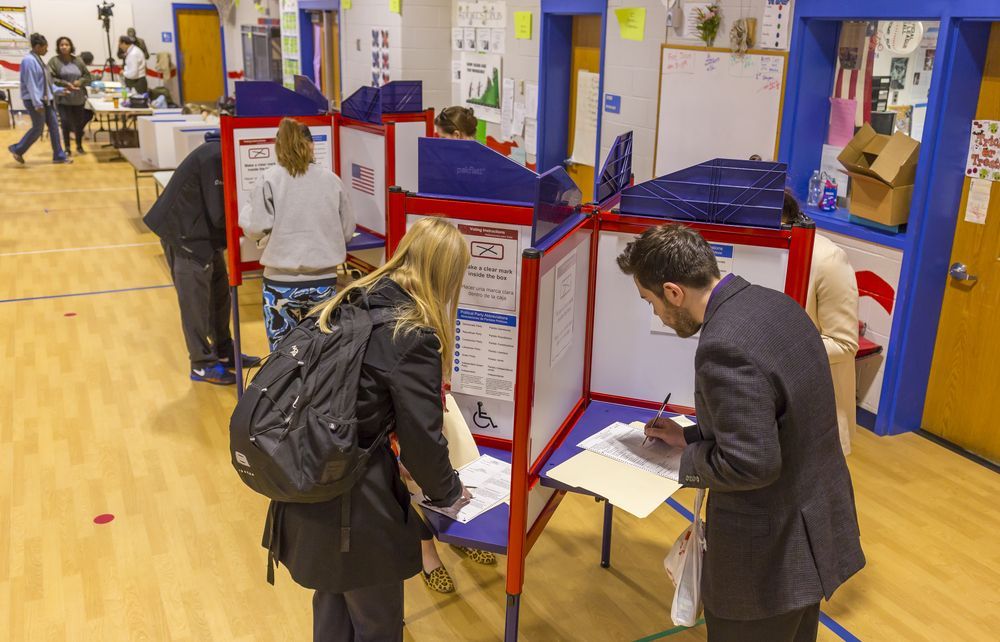
The exclamations from my son while he held my hand as we walked into our neighborhood polling location were matched only in enthusiasm by his chorus of “Hi! Hi! Hello!” to every volunteer greeting voters at the door. My gregarious and flag-obsessed two year old beamed with pride and wonder — and I found myself smiling back with a lump in my throat.
What hit me in that moment was how deeply, instinctively he recognized something sacred — that the flag waving outside that polling place wasn’t just a piece of fabric. It was a symbol of freedom, of sacrifice, and of a system that allows his father, his mother, and one day, him — to have a say in how we’re governed.
Remembering What We Often Forget
In my world of communications and campaigns, Election Day is usually a blur of numbers, field updates, and a dozen phone calls before sunrise. It’s easy to get caught up in the churn of American politics: who turns out, what message is moving, where momentum is building or fading.
But this morning was different. For the first time in a long time, I wasn’t thinking about turnout models or precincts. I was reminded of how extraordinary it is that we can walk freely into a polling place, cast a ballot without fear, and trust that the process — imperfect as it may be — reflects the will of the people.
Our freedom is fragile.
It has been defended, fought for, and preserved by generations before us — soldiers who landed on beaches half a world away, civil rights activists who faced hatred with courage, and ordinary citizens who decided that this experiment in self-government was worth the struggle. As I watched my son wave at the flag, I realized that he’s inheriting not just a country, but a responsibility.
Freedom, Stewardship, and the Long Game
The right to vote isn’t just about choosing leaders; it’s about affirming the belief that every citizen has a stake in this nation’s future. Each ballot represents trust — in our Constitution, in our institutions, and in each other.
Good governance and sound policy aren’t born in headlines or campaign slogans; they’re born in civic engagement. When more Americans vote, volunteer, and pay attention, our government works better. When we disengage, someone else decides what our future looks like.
That’s not a Republican truth or a Democratic one — it’s an American one.
Why Participation Matters
Holding my son as I completed my ballot, I saw in his eyes an image of what civic pride used to look like in this country — unfiltered and unjaded. He didn’t see red states or blue states. He saw a flag. He saw people serving their neighbors. He saw a community coming together to do something important.
That’s what our kids see when they watch us — how we talk about our country, how we treat those with whom we disagree, and how seriously we take the freedoms we inherited.
My son reminded me that democracy doesn’t survive on autopilot. It survives because each generation chooses to believe in it again. It survives when we teach our children that citizenship is an active verb — something you do, not just something you have.
So, as he shouted “flag!” and waved back at the volunteers, I realized that this little Election Day outing wasn’t just about me voting. It was about him witnessing what participation looks like — and hopefully understanding, one day, why it matters.
Policy and Practice
If we truly want to honor the meaning of that flag, we need to live out the responsibilities it represents. That includes preserving the integrity of our elections and ensuring that every citizen — no matter their background or belief — can participate in them with confidence.
It also means striving for the dreams we all share: safe neighborhoods, strong schools, affordable energy, and a government that stays close to the people it serves. Those aren’t partisan issues — they’re the foundation of a healthy republic.
Public trust is reinforced when citizens remember that freedom requires participation, not passivity, and by holding our elected leaders to a higher standard of principles than a common individual.
Hope in a Small Voice
When I finished voting, my son watched as I slide the ballot into the machine and he let out a confident “Yea!” almost as if he was telling me, “We did it!” Although, I am not sure his excitement and approval were over the fulfillment of my duty as an American or the “Future Voter” sticker handed to him with an American flag on it.
As we left, he looked back one more time and waved to the volunteers. I smiled, realizing that in a world where so much feels complicated, the things that truly matter are still simple.
Freedom. Family. Faith. Responsibility.
That’s what caught me off guard today — that the most powerful lesson on Election Day didn’t come from a headline or a campaign. It came from a child’s awe at a flag fluttering in the November wind.
The promise of this country isn’t in Washington, D.C. or any one politician — it’s in the people who still show up, still vote, and still believe.
One day, he’ll walk into a polling place on his own. He’ll stand in line, look up at that same flag, and maybe remember this morning. And I hope he’ll feel what I felt — gratitude, pride, and a sense of duty to protect the freedoms that have protected us. And I hope that his son or daughter will be holding his hand when he does and he gets to see the light of excitement in their eyes over the presence of an American flag or a “Future Voter” sticker.
So, yes — I’ll keep working on campaigns, writing strategy memos, and debating policy. But I’ll also remember that this morning, a two-year-old boy reminded me what patriotism looks like — joy, gratitude, and hope in a free country worth protecting.
Rob Burgess is a national Republican strategist, and Chief Executive Officer at Connector, Inc. – a boutique government relations and political affairs firm with offices in Washington, D.C.