
What Sports Teach Our Kids That a Classroom Can’t
You don't get stronger by wishing for it, and our kids shouldn't be taught otherwise.
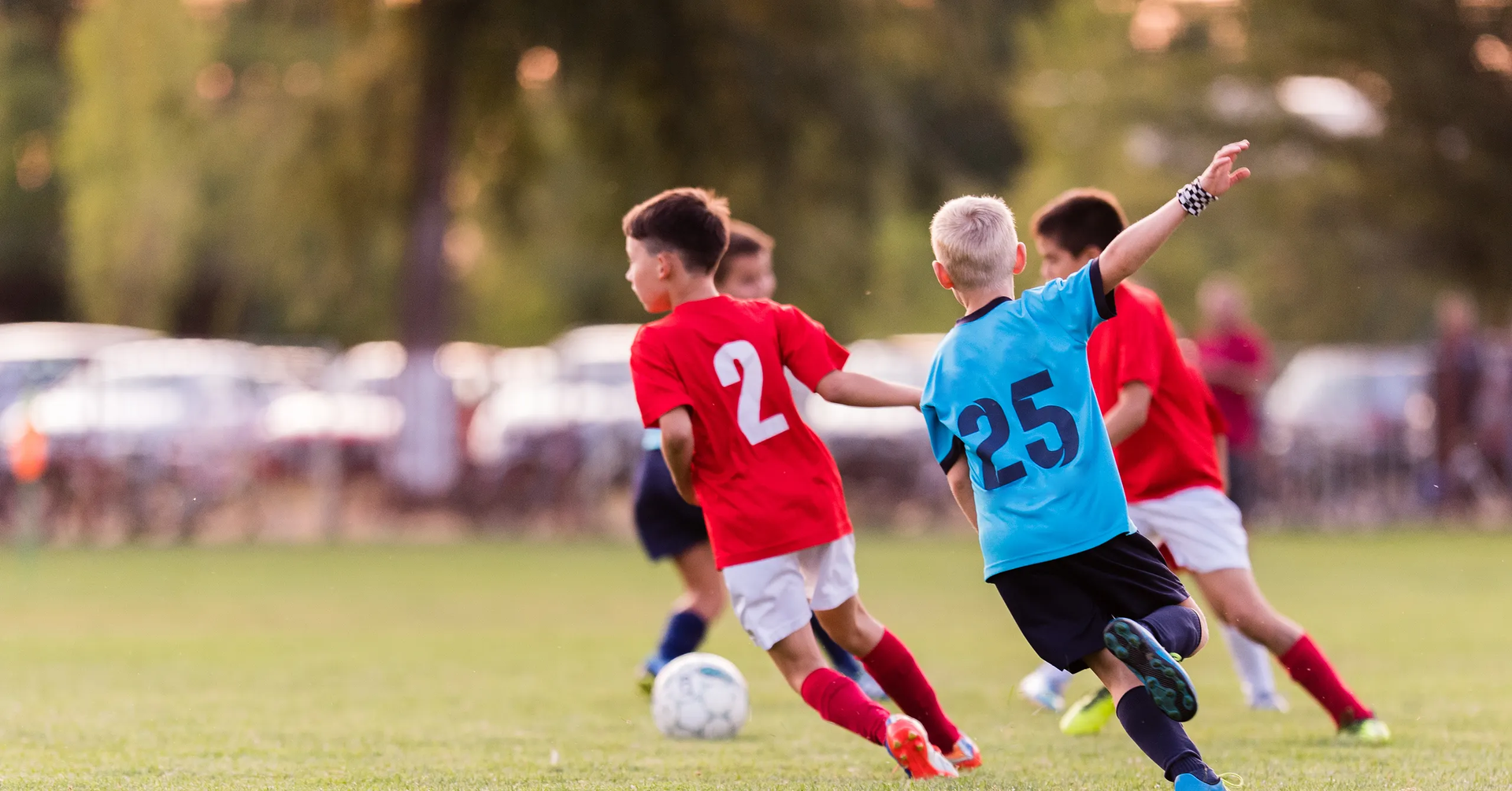
In a world where children are increasingly spending their time in front of screens, there is something profoundly valuable about putting on a uniform, stepping onto a field or court, and becoming part of something bigger than yourself.
Team sports teach lessons you can’t always learn from a textbook. They teach young people that success rarely comes from individual effort alone. You have to communicate. You have to trust the person next to you. You have to accept responsibility when you make a mistake, and you have to be willing to pick up your teammate when they make one.
These are not just sports lessons. They are life lessons.
A young athlete learns quickly that talent can only take you so far. Showing up to practice when you’re tired, running one more drill when you don’t want to, listening to a coach, accepting criticism, and working to improve after a disappointing performance all build character. So does losing.
In today’s culture, we sometimes go out of our way to protect young people from failure. But failure is one of the greatest teachers we have. Sports give children a safe and structured environment in which to experience disappointment and learn how to respond to it. You don’t win every game. You don’t make every shot. You don’t always get the starting position. Sometimes the referee makes a call you don’t agree with. Sometimes your team simply isn’t good enough that day.
And then you have to get up and do it again.
That is resilience.
There is also something uniquely American about the idea that a group of individuals can come together, put aside their differences, and work toward a common goal. A football team doesn’t succeed because every player is the same. A baseball team doesn’t need nine people with identical skills. A basketball team needs different players to understand their different responsibilities.
The lesson is simple: we don’t all have to be the same to accomplish something together.
That principle extends far beyond athletics. It applies to families, businesses, military units, communities and our country as a whole.
Even individual sports teach many of the same lessons. Wrestling, swimming, golf, tennis, track and other individual pursuits require discipline, preparation, perseverance and personal accountability. When you’re competing individually, there is nowhere to hide. Your preparation is yours. Your performance is yours. And if you fall short, you have to figure out how to get better.
Perhaps most importantly, sports teach young people that there is dignity in hard work.
You don’t get stronger by wishing for it. You don’t become a better athlete by being told that you already are one. Improvement requires effort. It requires sacrifice. It requires doing things that aren’t always comfortable.
Those are values worth preserving.
And this is where I think conservatives have an important conversation to continue having about childhood and education. We should be asking whether we’re giving young people enough opportunities to develop the character traits they will need when they eventually leave our homes and enter the real world.
It’s fair to question why character-building activities like competitive sports, scouting, vocational programs, community service and other structured activities sometimes receive less attention in our broader cultural conversation than they deserve. This shouldn’t be a partisan issue. Children from every political background can benefit from learning discipline, responsibility, teamwork and perseverance.
But there is a legitimate philosophical difference worth discussing.
A conservative approach to raising children generally places a strong emphasis on personal responsibility, self-reliance, discipline, family and community. Youth sports naturally reinforce many of those principles. They give children responsibilities and consequences while allowing parents and coaches to guide them through the process.
And perhaps that’s exactly why we should encourage more of it.
Our children are going to face adversity. They are going to experience rejection, disappointment, difficult coworkers, demanding bosses, financial challenges and situations where nobody is going to hand them a trophy simply for participating.
We shouldn’t prepare them for that reality by pretending those difficulties don’t exist.
We should prepare them by teaching them how to handle them.
Sports can help do that.
The point isn’t that every child needs to become a professional athlete. Far from it. The point is that every child deserves opportunities to learn what it means to work toward something, struggle for something, fail at something and then come back tomorrow determined to improve.
Whether it’s a championship game, a wrestling tournament, a track meet, a baseball practice or simply a child learning to ride a bike, the underlying lesson is the same:
Work matters.
Effort matters.
Character matters.
And how you respond when things don’t go your way matters.
Parents shouldn’t underestimate the value of those lessons.
Because years from now, our children may not remember the final score. They may not remember how many games they won or lost.
But they will remember what it felt like to work hard for something, to depend on others, to overcome disappointment, to earn someone’s trust and to discover that they were capable of more than they thought.
Those are lessons worth giving our children as early as possible.
Michael McDevitt, a United States Army Veteran (2004-2026), serves as Vice President of Operations at Connector, Inc. where he brings experience managing large organizations and advancing conservative causes. He and his wife, Kelly, live outside of Fort Bragg, NC with their two children.