
Why It Is Time to Reconsider the Jones Act
Rick Westerdale • November 24, 2025
If we truly want to be America First, it is imperative that we're American Energy First as well.
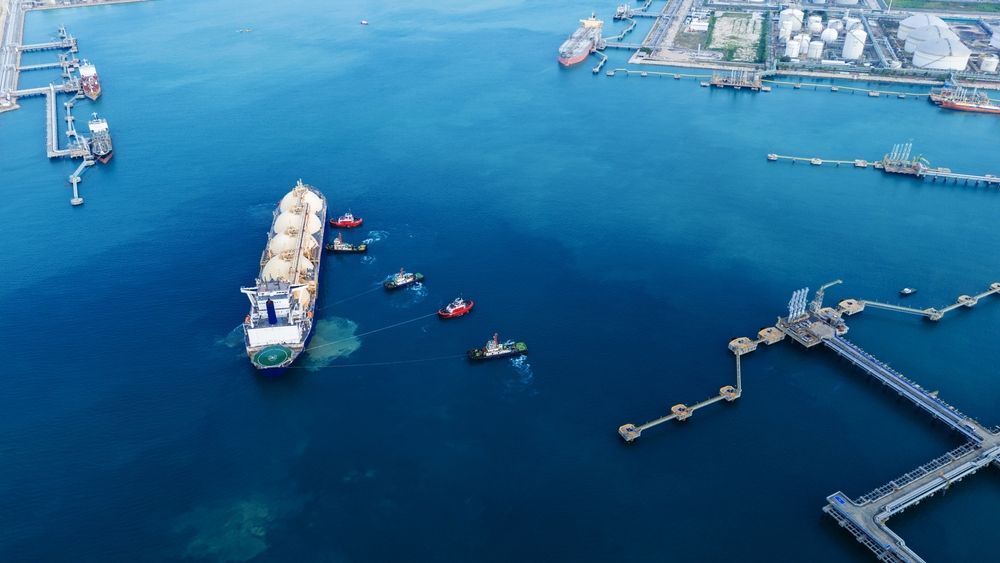
America is now the world’s largest exporter of liquefied natural gas (LNG) and a global leader in oil production. But ask a family in New England why their heating and electricity bills remain sky-high, or ask Alaskans why they may soon import LNG from overseas, and you’ll find the paradox: we have abundant domestic energy but lack the infrastructure and policies to get it where it’s needed most.
One of the biggest culprits? A 100-year-old maritime law: the Jones Act.
In a world where energy is as much a geopolitical lever as a domestic necessity, the Jones Act undermines our own strategic flexibility. It limits the responsiveness of the Strategic Petroleum Reserve and hampers rapid fuel delivery in emergencies—vulnerabilities our adversaries don’t share.
The Price of Protectionism
Passed in 1920, the Jones Act requires any shipment between U.S. ports to use vessels that are U.S.-built, U.S.-flagged, U.S.-owned, and U.S.-crewed. In theory, it protects national security and U.S. maritime jobs. In practice, it bottlenecks domestic energy logistics. Put bluntly, the Jones Act has trapped Americans behind high transportation costs. Waterborne shipping (the cheapest form of freight) accounts for only 2% of U.S. domestic freight movements, far below other nations, precisely because of such restrictions.
No U.S.-built LNG tankers exist today. Not one. As a result, LNG produced in Texas or Louisiana can be exported to Europe or Asia, but can’t legally be shipped to Boston or Anchorage. That means New England was forced to import LNG from Trinidad or even Russia. Alaska, despite holding massive natural gas reserves, is preparing to import LNG by sea to make up for regional shortfalls.
The economic toll is staggering. New Englanders pay 43% more than the national average for electricity. East Coast gasoline prices routinely run 10-15% higher than the Midwest. Shipping energy from the Gulf Coast to the Northeast or Puerto Rico is often more expensive than importing it from abroad. One study estimated that moving fuel from the Gulf Coast to the lower Atlantic by Jones Act tanker costs about $3.29 per barrel, versus only ~$1.23 per barrel using a foreign-flag ship – a difference of over $550 million per year given current volumes. Those millions are reflected in higher gasoline, diesel, and home heating prices across the Atlantic and Pacific states. Furthermore, the U.S. Strategic Petroleum Reserve is less effective because we can’t move fuel quickly between coasts without Jones Act-compliant tankers; which are 2 to 3 times more expensive to operate than foreign ships.
Who Wins, Who Loses?
Supporters of the Jones Act- chiefly shipbuilders, labor unions, and some national security advocates - argue the law safeguards American jobs and ensures a fleet ready for wartime. But the U.S. merchant fleet has shrunk dramatically, and 99% of the world’s shipbuilding now happens abroad. We’re paying a premium for a capability that no longer exists at scale. Strategically, some analysts argue that an agile global merchant fleet can complement the U.S. military better than an obsolete protected fleet.
Meanwhile, the losers are clear: energy consumers. For the average American family, this isn’t an abstract policy debate—it’s a real cost. Higher shipping costs driven by the Jones Act show up in utility bills, fuel prices, and grocery store receipts, quietly eroding household budgets month after month. The burden isn’t evenly distributed. From Puerto Rico and Hawaii to Alaska and rural tribal communities, those farthest from Gulf Coast production hubs often pay the highest prices—penalized not by distance alone, but by outdated policy.
American oil and gas producers lose too, constrained from efficiently serving domestic markets. Even with record U.S. oil output and strategic reserves, delivery bottlenecks mean relief from price spikes is muted. The climate loses, as well, since we rely more on trucks, foreign ships, and inefficient logistics to compensate.
What Can Be Done?
When considering changes to the Jones Act, policymakers must weigh a complex mix of national security, economic, and geopolitical factors—not just consumer cost. While the economic burden of the Jones Act on U.S. energy logistics is well documented, any reform must be deliberate and informed.
Key considerations include:
- National Security: The Jones Act underpins U.S. sealift readiness, commercial maritime availability during crises, and the domestic shipbuilding base. Repeal risks shrinking a strategic reserve of ships, crews, and yards critical to defense.
- Labor & Domestic Industry: Maritime unions and shipyards rely on Jones Act protections to preserve high-paying jobs and maintain a fragile industrial base. Abrupt changes could destabilize coastal economies tied to shipbuilding and crewing.
- Foreign Policy & Trade: Repeal may ease tensions with trade partners and increase fleet efficiency—but also opens the door to foreign-flagged carriers, including those from nations with whom the U.S. has strained relations.
- Legal & Regulatory Complexity: Reforms would require changes to long-standing cabotage rules, flagging laws, safety regulations, and labor standards—each with its own constituency and compliance burden.
- Infrastructure & Investment Signals: The current framework creates uncertainty for LNG infrastructure and coastal energy investment. Clarity—whether via reform or retention—matters for long-term capital planning.
- Political Reality: The Jones Act has deep bipartisan support in Congress, particularly among Gulf Coast and Great Lakes states. Any reform effort will face significant institutional resistance, even if economic logic supports change.
Repealing the Jones Act entirely is politically daunting. Rather than a full repeal, policymakers could explore targeted alternatives such as energy-only exemptions (e.g., for LNG and refined fuels), waivers for non-contiguous states and territories, or a framework that permits allied-flagged vessels on domestic routes. These options preserve strategic interests while addressing America’s modern energy and logistics challenges.
A targeted energy exemption is a practical first step. Congress should immediately authorize waivers for LNG and refined product shipments between U.S. ports. That alone would lower utility and fuel bills for millions. Longer term, a national commission should reexamine the Jones Act in the context of today’s energy economy. Can we modernize it without sacrificing security? Could regional cabotage or conditional exemptions (e.g. U.S.-flag requirement but foreign-built hulls) offer compromise?
Put American Energy First
America’s energy dominance means little if families and businesses can’t afford to access it. The Jones Act may have made sense in 1920. In 2025, it’s a costly anachronism. Let’s keep our strategic sealift strong, but let’s also stop handcuffing ourselves with laws that inflate prices, restrict access, and weaken energy security. If we truly want to unleash American energy, the Jones Act needs to be on the table.
Rick Westerdale has more than 30 years of experience across the federal government as well as in the global energy industry. As a Vice President at Connector, Inc., a boutique government relations and political affairs firm based in Washington, D.C., Rick advises clients on strategy, investment, and policy across healthcare, hydrocarbons, LNG, hydrogen, nuclear, and the broader energy transition.